
Small Bedroom Storage: 20 Ideas When You Have No Closet
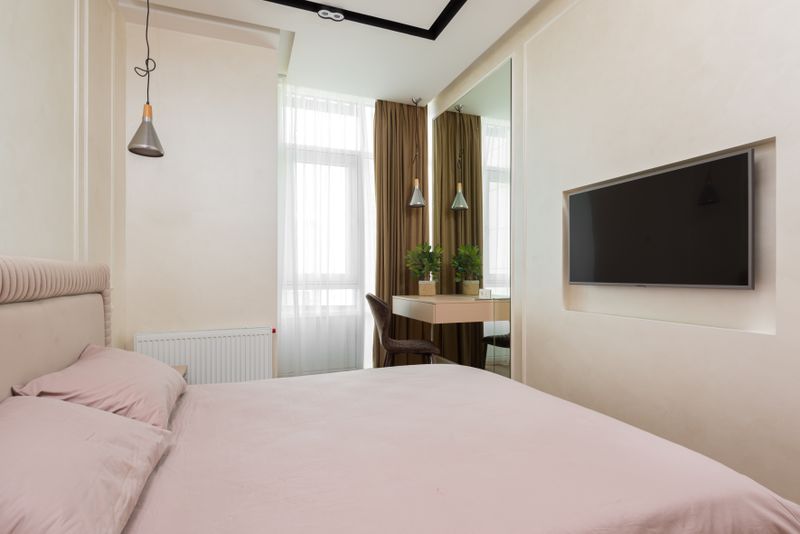
A bedroom with no closet feels like it's missing a room, but it isn't — it's missing a system. The clothes have nowhere to hang, so they pile on a chair. The folded stuff has no drawers, so it lives in shopping bags on the floor. The shoes drift into a heap by the door. None of that is a storage shortage in a room this size; it's storage that was never set up, because the one place the builder was supposed to put it simply isn't there. The good news is that a closet is just three things — a rod, some shelves, and a door to hide it — and you can rebuild all three out of space the room is currently wasting.
The trap with "small bedroom storage" is buying cute containers that hold the same pile one layer higher without adding any real capacity. The twenty ideas below are sorted the way a closet-free room actually breaks down: the dead air under the bed, the hanging clothes that need a home, the empty walls and the back of the door, the furniture that could be doing double duty, and the small stuff that ends up everywhere. Fifteen of them are specific products with strong organic review histories on Amazon in 2026, mostly between fifteen and fifty dollars; the other five are free technique. Work them in zone order and a room with no closet ends up with more usable storage than most rooms that have one.
Working with a tiny closet instead of none at all? See our small closet organization guide →
Under the bed — your biggest hidden room (1–4)
1. Foldable under-bed storage bins
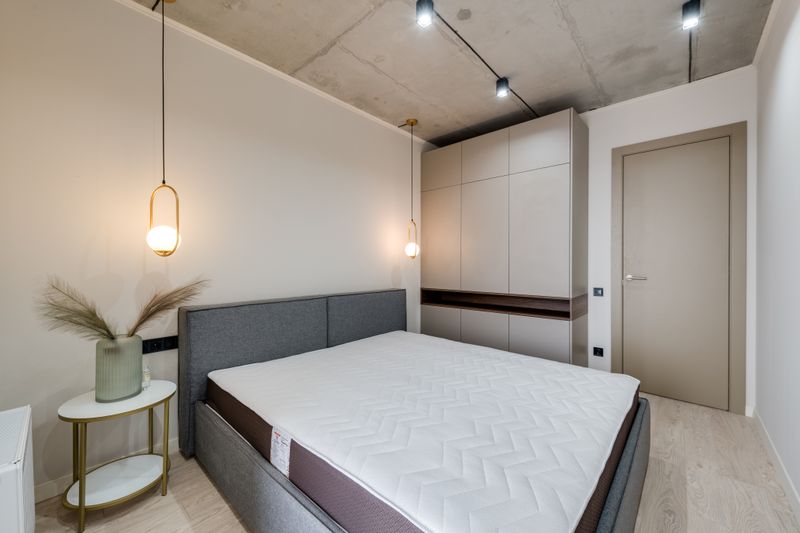
The single largest untapped space in almost any bedroom is the flat rectangle under the mattress, and in a closet-free room it's the closest thing you have to a second dresser. A set of foldable fabric under-bed bins with a clear top panel and handles turns that dead air into pull-out drawers for folded clothes, extra bedding, or off-season layers — you slide the whole bin out, grab what you need, and slide it back. The clear lid means you don't have to remember which bin holds what, and because they collapse flat when empty, they store away instead of becoming clutter themselves. Buy the multi-pack and assign one bin per category. See it on Amazon →
2. Bed risers to create the clearance
If your bed sits low, the under-bed zone is a two-inch slot that fits nothing, and that's a fixable problem rather than a lost cause. A set of adjustable bed risers lifts the frame three to five inches, which is often the difference between a gap that holds nothing and one that swallows a row of storage bins. The stackable design lets you choose the height, the wide bases spread the weight so nothing tips, and the lift also makes the bed easier to get in and out of. Install these first — they unlock every other under-bed idea on this list. See it on Amazon →
3. Wheeled under-bed boxes for the heavy, seasonal stuff
Fabric bins are perfect for clothes, but for heavier loads — winter boots, spare linens, the stuff you touch twice a year — you want something that rolls instead of drags. A set of latching under-bed boxes on casters glides out on the floor so a full box doesn't require crawling under the frame, and the locking lids keep dust off things that sit for months. The clear or translucent body lets you spot what's inside, and the latches mean you can stack them in a closet later if you ever get one. Use these for the archive; use the fabric bins for the rotation. See it on Amazon →
4. Zone the under-bed space by how often you reach for it
The mistake people make with under-bed storage is filling it randomly, so the thing they need weekly ends up behind the thing they need never. Split the space into a near half and a far half: the side you can reach without moving furniture holds the current-season, weekly-access stuff, and the far corners hold the archive you open twice a year. This costs nothing and it's the difference between under-bed storage that actually gets used and a set of bins you forget exist. Label the fronts so you never have to pull three to find one.
Build the closet the room doesn't have (5–7)
5. A freestanding portable wardrobe
When the room has no closet, the most direct fix is to add one you can assemble in an afternoon. A freestanding portable wardrobe gives you a hanging rod plus shelves inside a fabric-covered frame, so your hanging clothes finally have a home and the whole thing zips shut to hide the contents — which is the part an open rack can't do. It tucks into a corner, stands against a wall where a closet would have been, and comes apart if you move. For a rented room where you can't build anything permanent, this is the closest thing to a real closet you can own outright. See it on Amazon →
6. An open garment rack you actually see
If you'd rather have your clothes visible and grab-and-go, a standard garment rack turns a blank wall into an open wardrobe and doubles as a get-dressed station. Everything hangs at eye level, nothing gets buried, and a room styled around a tidy rack of clothes reads as intentional rather than makeshift. The lower bar or a shelf underneath holds shoes or folded bins, so the rack does two jobs in one footprint. Keep it edited to what you actually wear this season — an open rack rewards a small, curated wardrobe and punishes an overstuffed one. See it on Amazon →
7. Vacuum bags to shrink the off-season half
Half of what needs storing in a bedroom isn't in use right now — it's the opposite season sitting there taking up prime space. A set of vacuum storage bags compresses puffy coats, sweaters, and spare duvets down to a fraction of their size, so the off-season half of your wardrobe collapses into a slim stack that slides under the bed or onto a high shelf. Squeezing the air out is what buys back the room for the clothes you're actually wearing, and the sealed bags keep dust, damp, and moths off everything until the weather turns. Rotate them twice a year and you effectively double your storage. See it on Amazon →
Steal our small-space starter sheets (free)
A one-page declutter checklist + a ten-minute reset plan — the two pages that make a small-room fix actually stick. They're part of our Small-Space Pantry Bundle (310+ labels + 7 planner pages, $12).
Get the free sheetsThe back of the door and the empty walls (8–11)
8. An over-the-door pocket organizer
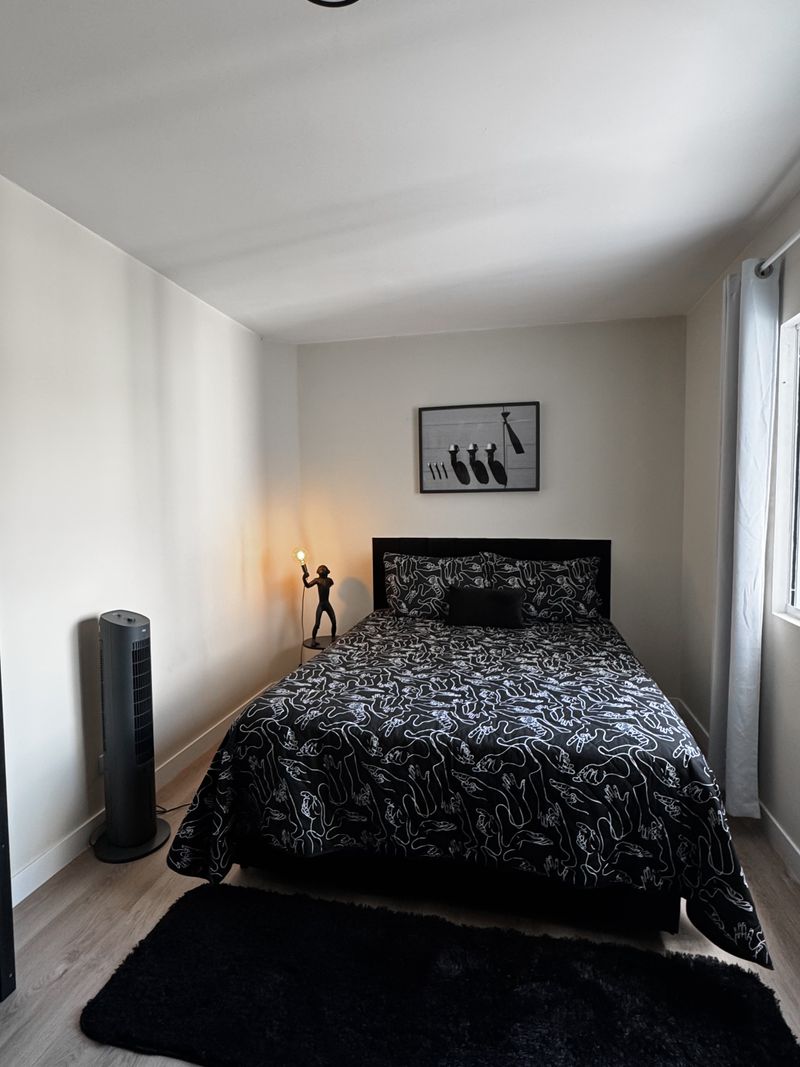
The back of the bedroom door is a full sheet of vertical storage that almost everyone ignores. A clear over-the-door organizer with two dozen pockets hangs there for free and holds everything small that otherwise scatters — shoes, socks, scarves, chargers, toiletries — each in its own visible slot. The clear pockets mean you find things at a glance instead of digging, and because it hangs on the door it steals zero floor space in a room that has none to give. In a closet-free bedroom, the door is the easiest storage win you'll ever install. See it on Amazon →
9. A hanging shelf tower on the rack
A hanging rod is great for clothes on hangers but useless for folded sweaters, jeans, or bags — until you add a hanging shelf organizer. This fabric tower of six stacked shelves hooks over the rod of your garment rack or portable wardrobe and instantly converts a slice of hanging space into a column of cubbies for the things that fold. It gives your denim, knits, and handbags a defined home so they stop sliding off hangers or piling on the floor, and it collapses flat if you rearrange. Hang one at the end of the rack and you've added a small dresser for nothing. See it on Amazon →
10. Floating wall shelves above eye level
The wall space above your furniture is prime storage sitting completely empty. A set of floating shelves mounted above the dresser or beside the bed lifts books, folded baskets, and everyday odds and ends off the surfaces below and onto the wall, clearing the clutter that makes a small room feel full. Mounting them higher than eye level uses the air nobody's competing for, and a shelf with a bin or two on it doubles as hidden storage rather than just a display ledge. Vertical is the direction a small bedroom always has room to grow. See it on Amazon →
11. A row of wall hooks for the daily rotation
The chair in the corner becomes a clothes mountain because the stuff you wore once but aren't ready to wash has nowhere to land. A cheap strip of wall hooks by the door or beside the bed gives that daily rotation — the robe, the worn-once jeans, tomorrow's outfit, the bag you carry every day — a defined home off the floor and off the chair. It's the lowest-effort fix on this list and it kills the single biggest source of visual mess in most small bedrooms. Mount them where you naturally drop things, not where they look neatest.
Furniture that stores while it works (12–15)
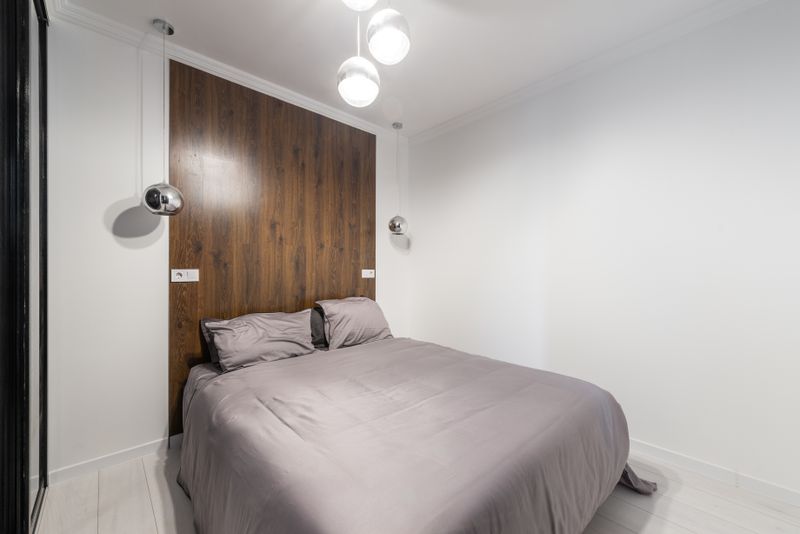
12. A storage ottoman at the foot of the bed
In a small bedroom, every piece of furniture should earn its footprint twice, and a storage ottoman is the cleanest example. Set at the foot of the bed it works as a seat for putting on shoes and a landing spot for a blanket, while the whole interior swallows spare bedding, extra pillows, or bulky sweaters out of sight. The folding versions collapse flat when empty, and the lidded top hides the contents completely — so it reads as furniture, not storage. One ottoman replaces a blanket chest and a bench in the same space. See it on Amazon →
13. A nightstand with real drawers
A bedside table that's just a flat surface collects clutter; one with drawers absorbs it. A compact nightstand with two fabric drawers and a solid top gives the small stuff that lives by the bed — chargers, books, medications, the daily jumble — an enclosed home while still holding a lamp and a glass of water up top. In a room with no closet, a couple of hidden drawers within arm's reach of the pillow does real work, and the small footprint fits beside a bed that's already tight against the wall. Choose one with drawers over a plain table every time. See it on Amazon →
14. A hanging bedside caddy for the nightstand you don't have
Sometimes there's no floor space for a nightstand at all — the bed is wedged against the wall and a table won't fit. A hanging bedside caddy slips between the mattress and the frame and holds your phone, a book, glasses, and the remote in pockets that hang right at the edge of the bed. It costs a few dollars, adds zero footprint, and solves the "where do I put my phone" problem that a wall-hugging bed creates. For a bunk, a lofted bed, or a mattress on the floor, it's the only bedside storage that works. See it on Amazon →
15. Collapsible cubes to turn a shelf into drawers
Open shelving — a bookcase, a cube unit, the floating shelves from idea ten — looks tidy for a week and then becomes a jumble, because loose items on an open shelf have nothing containing them. A set of collapsible fabric storage cubes drops into those shelves and turns each opening into a soft-sided drawer for socks, underwear, accessories, or craft supplies. The handles let you pull the whole cube out like a drawer, the labels stay legible, and they fold flat when you don't need them. This is how you get dresser-style organization out of shelving you already own. See it on Amazon →
Inside the dresser and the small stuff (16–20)
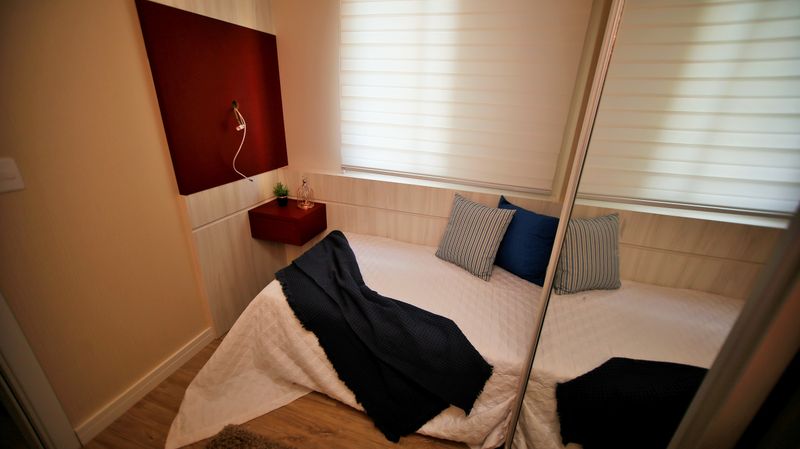
16. Adjustable drawer dividers
When a dresser is doing the job of a whole closet, a deep drawer of everything jumbled together wastes most of its own capacity. A set of adjustable spring-loaded drawer dividers splits each drawer into lanes that hold their shape, so socks stay separate from underwear and folded shirts stand in tidy rows instead of collapsing into a pile. The tension ends expand to fit any drawer width without tools, and dividing the space is what lets you file clothes upright and see the whole drawer at once. A divided drawer holds noticeably more than a heaped one. See it on Amazon →
17. File-fold instead of stacking
The way you fold matters more than any product when a dresser is your main storage. Stacked flat, the shirt on the bottom is invisible and never gets worn; folded into a small rectangle and stood upright on its edge, every shirt is visible at once like files in a drawer. File-folding costs nothing, fits far more into the same drawer, and ends the daily habit of unstacking the whole pile to reach the one thing at the bottom. Pair it with the dividers above and a single dresser starts doing the work of a closet.
18. A hanging jewelry and accessory organizer
Necklaces knot, earrings lose their pairs, and small accessories vanish into drawers — and in a room with no closet there's no obvious place to corral them. A double-sided hanging jewelry organizer with dozens of clear pockets hangs on the back of the door or on your garment rack and gives every piece its own visible slot, so nothing tangles and nothing gets lost. The clear vinyl lets you see the whole collection at a glance, and hanging it uses vertical space that was doing nothing. It's a cheap fix for the most losable category of things you own. See it on Amazon →
19. Edit before you store, then keep one-in-one-out
The most powerful storage tool in a closet-free room is a donate bag, because half of what feels like a storage shortage is really a volume problem. Before you buy a single bin, pull everything out and keep only what you actually wear and use — a small bedroom simply cannot hold a maximal wardrobe, and pretending otherwise is what keeps it cluttered. Once it's edited down to what fits, hold the line with a one-in-one-out rule: a new sweater means an old one leaves. Storage systems keep a right-sized wardrobe tidy; they can't rescue an oversized one.
20. Buy for the zone in front of you, not the whole room
Don't order every idea on this list at once. Set up your hanging solution first, because clothes with nowhere to hang are the hardest problem in a closet-free room, then add under-bed storage, then work the walls and the door as you find the next friction. Live with each fix for a few days before adding the next, and let the actual bottleneck tell you what to buy rather than guessing. Most small bedrooms discover that four or five well-placed pieces do ninety percent of the work, and the rest of the "must-have" list was never solving a problem they had.
Save this for later
Pin this guide to your closet-and-storage board so it's there on your next bedroom reset.
Save to PinterestPin these ideas
Tall, save-ready images for your organization boards.


One small-space idea, every Sunday
Join and we’ll send the free small-space starter sheets right away, then one organization idea worth your time each week. No clutter — obviously.
FAQ
- What can I use instead of a closet in a small bedroom?
- The most space-efficient closet replacement is a freestanding portable wardrobe or an open garment rack, which give you a hanging rod and shelves without the depth a built-in closet steals from the room. Pair it with under-bed bins for folded clothes and an over-the-door organizer for shoes and accessories, and you have a full closet's worth of storage spread across space that was otherwise empty.
- How do I store clothes in a bedroom with no closet?
- Split clothes by how you store them, then match each type to a zone. Hanging clothes go on a garment rack or in a freestanding wardrobe; folded clothes go in a dresser or under-bed bins; off-season clothes get vacuum-sealed and pushed under the bed or onto a high shelf. Keeping the current season at arm's reach and everything else compressed and out of the way is what makes a closet-free room work.
- What is the best under-bed storage for a small bedroom?
- For clothes and linens, foldable fabric bins with a clear lid and handles are the best value because they slide out easily and collapse flat when empty. For heavier or seasonal items, wheeled latching boxes roll out without dragging. If the gap under your bed is too shallow, add bed risers first to create a few extra inches of clearance and unlock the whole zone.
- How do I maximize storage in a tiny bedroom?
- Go vertical and go under. Walls and the back of the door are free storage most people ignore, so add floating shelves, hooks, and an over-the-door organizer. Then use the dead air under the bed with bins or risers. Finally, choose furniture that stores while it works, like a storage ottoman or a nightstand with real drawers, so every piece earns its footprint twice.
- Where do I start organizing a bedroom with no closet?
- Start by editing, not buying. Pull everything out, keep only what you wear and use, and you may find the storage problem was half a volume problem. Then set up your hanging solution first, because that's the hardest category to store without a closet, and build under-bed and vertical storage around it. Fix one zone, live with it a week, then decide what still needs a home.