
21 Closet Organization Ideas for Small Closets
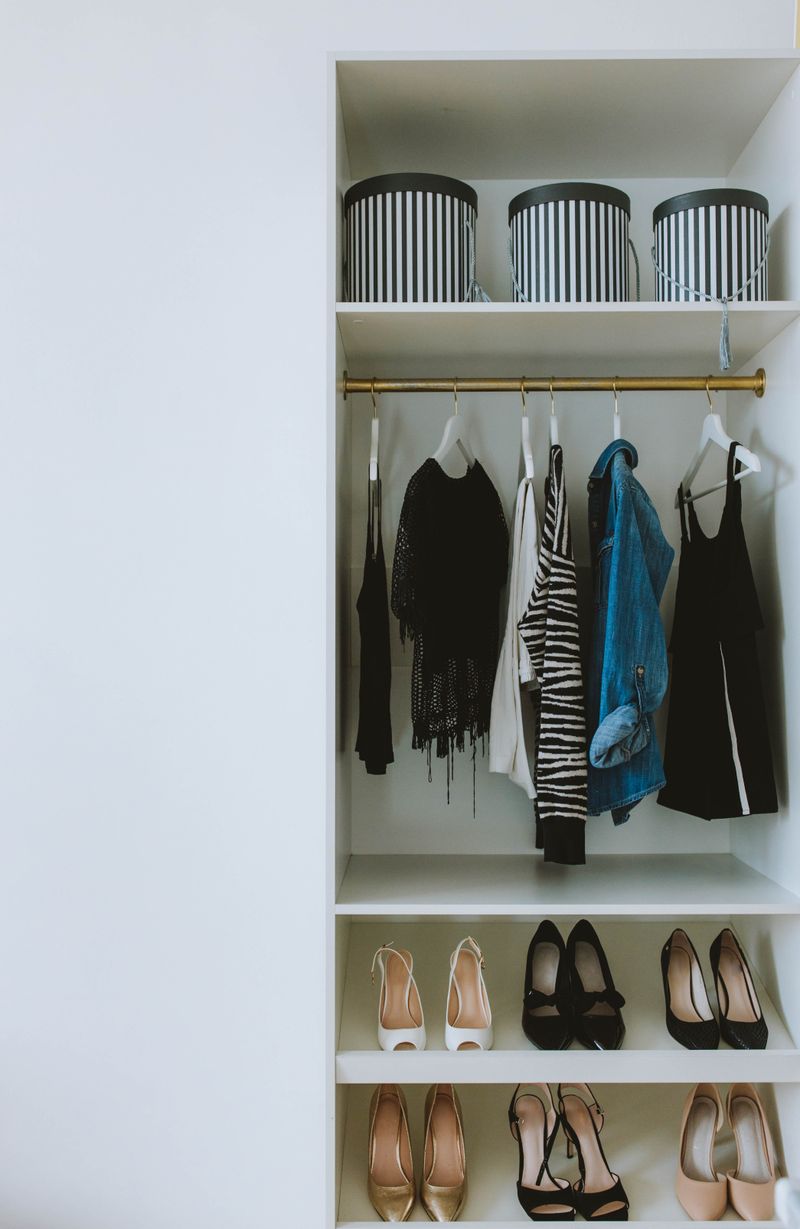
A small closet is a physics problem. You have one rod, one shelf, one strip of floor — and a wardrobe that expands to fill whatever it's given, then keeps going. The solution isn't willpower and it isn't a bigger closet. It's converting every unused plane — the air under the rod, the height above the shelf, the back of the door — into storage that has a job.
These 21 ideas are ordered by zone: rod, shelf, floor, door, then the overflow and the habits that keep it all working. Everything is renter-friendly. Do the free ones first; buy second.
Organizing the whole place? Start with the pillar guide: 37 small apartment organization ideas →
The rod (your most valuable twelve inches per foot)

1. Switch every hanger to slim velvet — all at once
Mixed plastic and wire hangers waste roughly a third of your rod in shoulder bumps and gaps. Matching slim velvet hangers recover it in one afternoon, and the grip ends the shirts-on-the-floor problem. This is the highest-leverage single change in this entire post — do it first, do it completely. See it on Amazon →
2. Double the rod for your short hanging
Shirts, blouses, and folded-over pants only need half the closet's height — the space below them is dead air. An adjustable second rod hangs from the one you have, no tools, and effectively doubles that section. Keep one stretch full-height for dresses and coats. See it on Amazon →
3. Convert leftover rod into shelves
A hanging shelf organizer turns twelve inches of rod into six stacked cubbies for jeans, sweaters, and gym clothes — folded storage exactly where a dresser won't fit. The structured kind holds its shape even half-empty. See it on Amazon →
4. Give belts and scarves one rotating home
Accessories draped over hangers and doorknobs are clutter with extra steps. A rotating organizer holds dozens of belts, scarves, and tank tops in a single hanger's width of rod. One home, spinning access, zero excuses. See it on Amazon →
5. Hang by category, then by color
Free, ten minutes, and it changes how the closet feels: all shirts together, then pants, then dresses, each block running light to dark. You stop rummaging because everything has a predictable address — and duplicates announce themselves before you buy a fourth navy sweater.
If the closet is the only storage the bedroom has, the walls and the bed frame are next: 19 small bedroom storage ideas →
The shelf (where stacks go to fall over)
6. Fence your stacks with shelf dividers
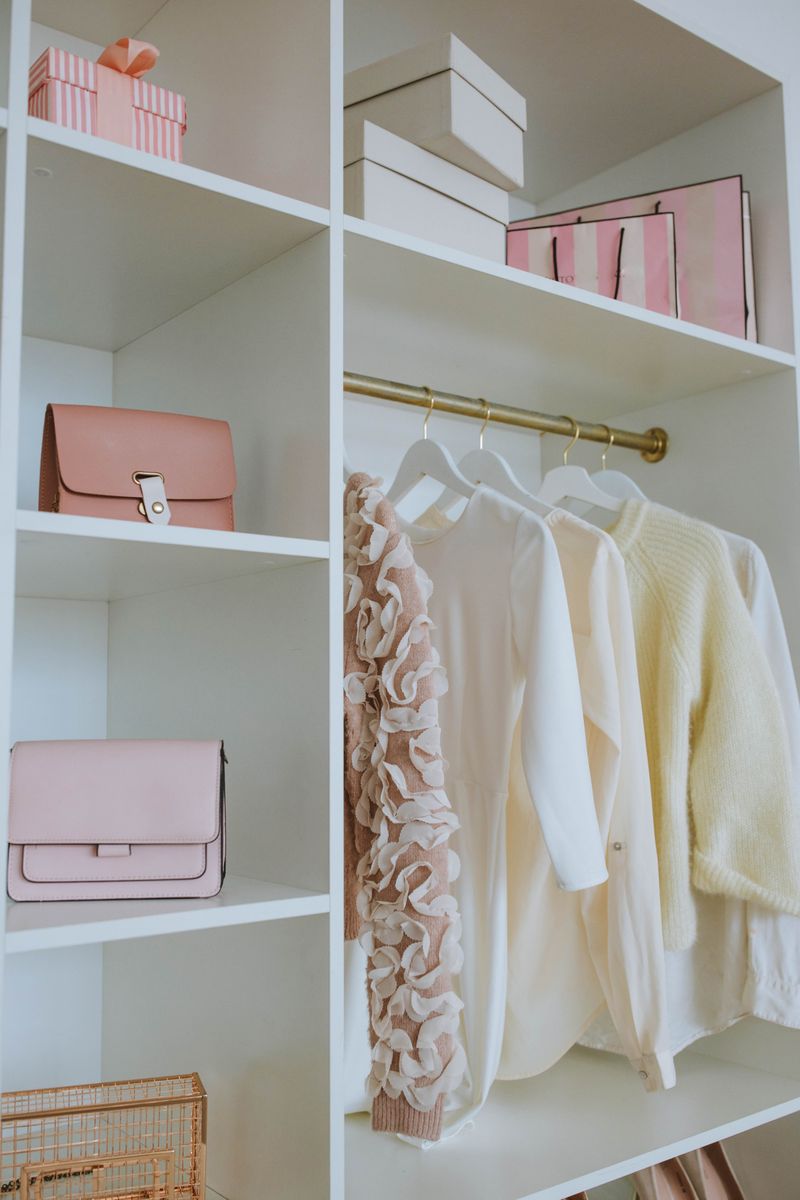
Every sweater stack taller than four items is a slow-motion avalanche. Clear dividers clip onto the shelf and hold each stack vertical, so pulling one sweater doesn't topple six. They disappear visually, which matters in a closet you see every morning. See it on Amazon →
7. Treat the top shelf as bins, not surface
Loose piles up high become invisible and unreachable — the worst of both. Collapsible fabric cubes turn the top shelf into pull-down drawers: one for swimwear, one for winter accessories, one for the bag collection's off-duty rotation. See it on Amazon →
8. Stand handbags upright in open bins
Purses stacked flat deform and disappear; purses standing in trapezoid bins stay shaped and visible like books on a shelf. Stuff the structured ones with tissue and they hold their posture between uses. See it on Amazon →
9. File-fold anything that lives in a stack
Folded upright like file folders, every t-shirt is visible at once and removing one disturbs nothing. It takes no longer than flat folding once the muscle memory sets in — about one laundry cycle. The trick that makes it hold: fold to a height that matches the container, not to a standard size, so each piece supports its neighbors instead of slumping. T-shirts want roughly a 5–6 inch finished height in a standard shelf bin; jeans want the full bin depth. Anything too slippery to stand up — silk, athletic knits — belongs on a hanger or in a divided drawer instead.
10. Zone by reach: front row daily, back row someday
Deep shelves eat clothes. Put what you wear weekly in the front half, and push the occasional wear to the back in labeled bins. If you can't see it or name it, the back of the shelf is where it goes to expire — labels are the fix.
The floor (one row, nothing loose)
11. Cap shoes at one visible row
The closet floor holds one row of the shoes you actually wear this season. Everything else goes up on the door (#14) or into the off-season zone (#17). A floor you can see is a closet that stays organized; a shoe pile is an entropy machine. Practical numbers: a standard 24-inch-wide reach-in floor fits about four pairs of adult shoes side by side, or six if you stagger them heel-to-toe. If your season needs more than that, the overflow belongs on the door, not on the floor — the moment a second row starts, the front row stops being reachable and both rows stop getting worn.
12. Roll a slim cart into the dead gap
Most closets have a vertical slice of nothing beside the hanging clothes. A four-tier slim cart turns it into a rolling dresser for workout gear, laundry supplies, or the kids' accessories — and rolls out when you need to reach behind it. See it on Amazon →
13. Lift everything else off the floor
The vacuum, the gift-wrap tube, the donation pile — anything sitting loose on the closet floor blocks the one surface you need for shoes. Hang it, bin it, or relocate it. The rule is binary: shoes and wheels only. The two repeat offenders are the donation bag that never leaves and the vacuum that has no other home — give the donation bag a hard exit date the moment you start it, and the vacuum a hook, a corner outside the closet, or a spot under the stairs. Floor storage feels free and costs you the whole zone.
Shoes still piling up by the front door instead? That is an entryway problem, not a closet one: small entryway organization ideas →
The door & walls (free square footage, currently unemployed)
14. Hang an over-door organizer — for shoes or everything else
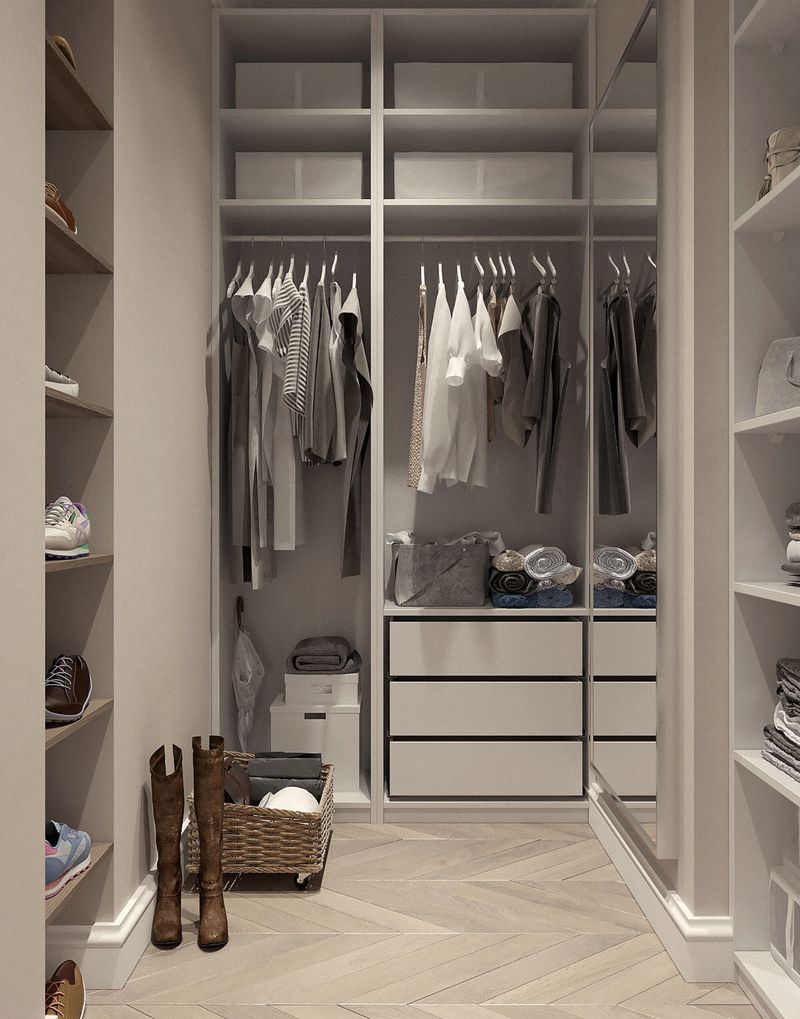
The back of the door is a bonus closet. Clear pockets hold twenty-plus pairs of shoes at eye level — or go heterodox: sunscreen, chargers, scarves, the small stuff that otherwise silts up the shelf. Clear beats canvas because you find things by sight. See it on Amazon →
15. Put two hooks where tomorrow happens
One adhesive hook inside the closet for tomorrow's outfit, one for the robe or the worn-once jeans that aren't dirty yet. That second hook alone eliminates The Chair — you know the one.
16. Light it like you mean it
Most small closets are caves, and you can't maintain what you can't see. Stick-anywhere motion sensor lights switch on when the door opens and off on their own — no wiring, recharge every few weeks. The difference in usability is absurd for the effort. See it on Amazon →
The over-door and adhesive tricks in this section work in every small room — here is the same playbook applied to a rental you can’t drill: renter-friendly storage ideas →
Off-season & overflow (the other half of your wardrobe)
17. Vacuum-compress the off-season
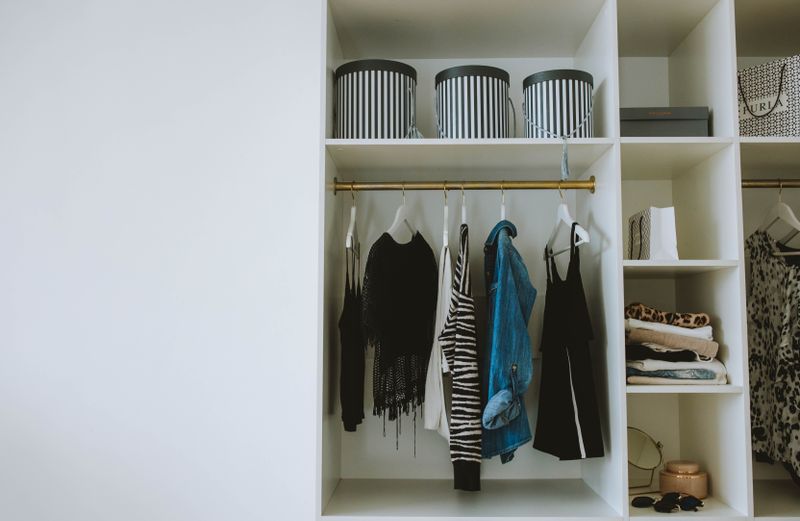
Winter coats and spare bedding shrink to a quarter of their volume in vacuum bags — suddenly the top shelf holds a whole season. Compress only what's washed and fully dry, and let down-filled pieces breathe a day after unsealing. Compressed bags are also the one thing that fits cleanly under a bed, which is where they should go if the top shelf is already full. See it on Amazon →
Out of shelf space for the compressed off-season? The flattest storage in the house is already under you: 15 under-bed storage ideas →
18. Divide your drawers like the shelf
If a dresser lives in or near the closet, foldable drawer boxes turn sock-and-underwear soup into a grid — every item visible, file-folded, one glance. Same principle as the shelf dividers: containers within containers is how small spaces scale. See it on Amazon →
19. Ritualize the seasonal swap
Twice a year, swap the front-and-center wardrobe with the compressed off-season. It takes an hour, and it's also your natural audit point: anything that survived a whole season untouched goes straight to the donation bag without a committee meeting.
Half of what belongs in the closet is usually still in a laundry basket — closing that loop is its own small system: small laundry room organization ideas →
Keep it working (the system is the habit)
20. One in, one out — enforced at the hanger
Here's the quiet enforcement mechanism: don't buy more hangers. When the matching set is full, something must leave before anything new hangs. The constraint does the discipline for you, which is the only kind of discipline that lasts.
21. Run the 90-day exile box
Can't decide what to cull? Put the maybes in a box, date it, and set a reminder. Anything still in the box in 90 days has answered the question for you. You're not deciding to get rid of it — you're just noticing you already did.
Steal our pantry starter sheets (free)
An aisle-by-aisle grocery list + a ten-minute pantry inventory — the two pages that make a reset actually stick. They're part of our Small-Space Pantry Bundle (310+ labels + 7 planner pages, $12).
Get the free sheetsStart with these three
Matching slim hangers (#1), shelf dividers (#6), and the second rod (#2). They attack the three biggest space leaks — hanger sprawl, falling stacks, and dead vertical air — and everything else in this post builds on that base. One Saturday morning, done. Budget roughly $60–$90 for all three if you buy the mid-range versions, and expect the hangers alone to account for most of the visible difference.
Same zone-by-zone method, different room: small bathroom organization ideas → · small kitchen organization ideas →
Save this for later
Pin this guide to your organization board so it's there when you need it.
Save to PinterestPin these ideas
Tall, save-ready images for your organization boards.


One small-space idea, every Sunday
Join and we’ll send the free pantry starter sheets right away, then one organization idea worth your time each week. No clutter — obviously.
FAQ
- How do you organize a small closet with too many clothes?
- Cull before you organize — the 90-day exile box (#21) makes it painless. Then work the zones in order: matching slim hangers, a second rod, hanging shelves. Organizing too many clothes without culling just produces denser clutter.
- How do I maximize hanging space in a small closet?
- Three moves stack on each other: slim velvet hangers recover roughly a third of the rod, an adjustable second rod doubles the short-hanging section, and a hanging shelf organizer converts whatever rod remains into folded storage.
- Are these ideas renter-friendly?
- Yes. Everything here is freestanding, hanging, over-door, or adhesive. Nothing requires drilling, and nothing needs patching at move-out.
- What should I buy first?
- Hangers, then shelf dividers, then the hanging shelf organizer, then the door organizer — in descending order of space recovered per dollar. Measure your rod length, shelf depth, and door clearance before ordering anything.
- How do you organize a small reach-in closet with only one rod and one shelf?
- Treat the single rod and single shelf as four zones, not two. Split the rod: two-thirds double-hung for shirts and folded pants, one-third left full height for dresses and coats. Fence the shelf with dividers and put a bin at each end so the corners stay usable. Then add the two surfaces the closet did not come with — the back of the door and the floor strip — and you have doubled the storage without touching the structure. A typical 5-foot reach-in goes from about 5 linear feet of hanging to roughly 8–9 this way.
- How much does it cost to organize a small closet?
- A functional reset runs about $60–$90: matching slim hangers, shelf dividers, and a second rod. Adding a hanging shelf organizer, an over-door organizer, and a set of fabric bins takes it to roughly $150–$200 — which is still a fraction of a custom closet system and it moves with you. Spend in that order; each step recovers less space per dollar than the one before it.