
Laundry Room Organization for Small Spaces: 18 Ideas
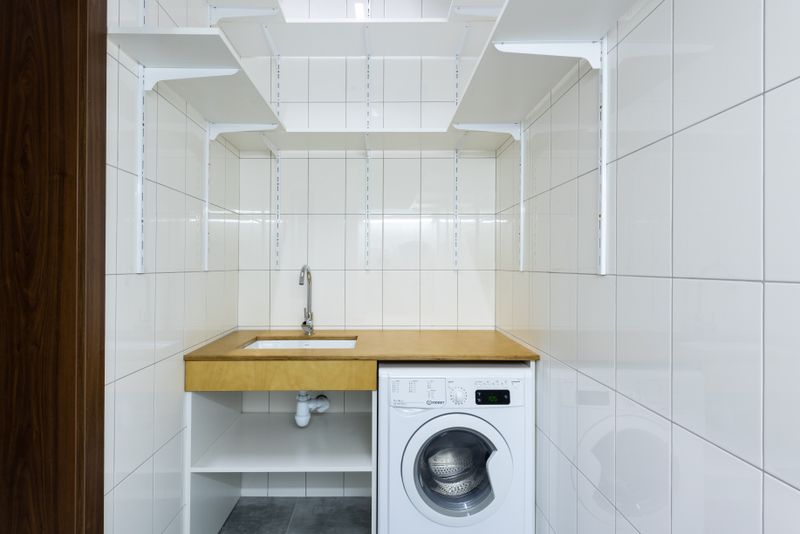
Nobody gets a big laundry room. You get a closet with bifold doors, a corner of the garage, or a hallway alcove exactly one washer and one dryer wide — and then the industry sells you storage designed for the laundry rooms in catalogs. The result is familiar: detergent on the machine lid, a drying rack blocking the door, and a floor that functions as a hamper.
The fix isn't more room. A laundry space has three surfaces most people never use — the wall above the machines, the gap beside them, and the back of the door — plus one workflow problem (sorting) that no shelf can solve. The eighteen ideas below work those four angles in order. Most install in minutes, and the whole list fits a space you can touch both walls of.
Renting, and can't drill? Pair this with 19 renter-friendly storage ideas →
The wall above the machines (1–5)
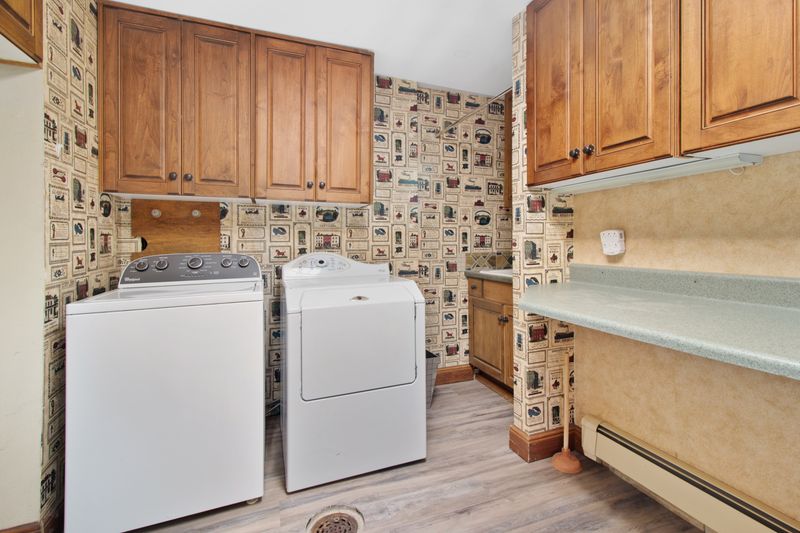
1. Claim the dead zone with an over-machine shelf
The two or three feet of wall above a washer and dryer is the biggest unused surface in the room, and a freestanding over-machine shelf turns it into a full supply hutch — no drilling into studs, no cabinets to install. Detergent, baskets, and backstock come off the machine lids, which means they stop migrating onto the floor mid-cycle. Measure your machine height plus clearance before ordering; front-loaders with pedestals eat more vertical room than you think. See it on Amazon →
2. A shelf with a hanging rod — storage and drying in one footprint
If you only mount one thing to the wall, make it earn double. An expandable shelf-with-rod puts supplies up top and gives shirts straight out of the dryer a place to hang before wrinkles set — the single upgrade that ends the chairs-as-drying-racks era in the rest of the house. It expands to fit the wall you actually have. See it on Amazon →
3. A fold-down drying rack that vanishes between loads
The problem with drying racks in small spaces isn't drying day — it's the other six days, when the rack stands in the middle of the floor holding one sock. A wall-mounted fold-down rack projects just a few inches flat against the wall, then swings out to hold a full load of delicates. It's the difference between a drying rack you own and a drying rack you trip over. See it on Amazon →
4. An accordion rack for the wall slice nothing else fits
Got a narrow strip of wall beside the machines or behind the door? An accordion-style rack collapses nearly flat and expands to roughly twenty linear feet of drying — dish towels, bras, the sweater that can't meet the dryer. Mount it at shoulder height and the room's most useless wall becomes its hardest-working one. See it on Amazon →
5. A retractable clothesline for zero-footprint drying
The most space-efficient drying system ever invented is a line that exists only when you need it. A retractable clothesline mounts in a housing the size of a fist, pulls across the room on laundry day, and disappears the rest of the week. Across a laundry closet, a garage corner, or even a bathtub, it dries a load in literally zero floor space. See it on Amazon →
Gaps, doors, and the side of the machine (6–9)
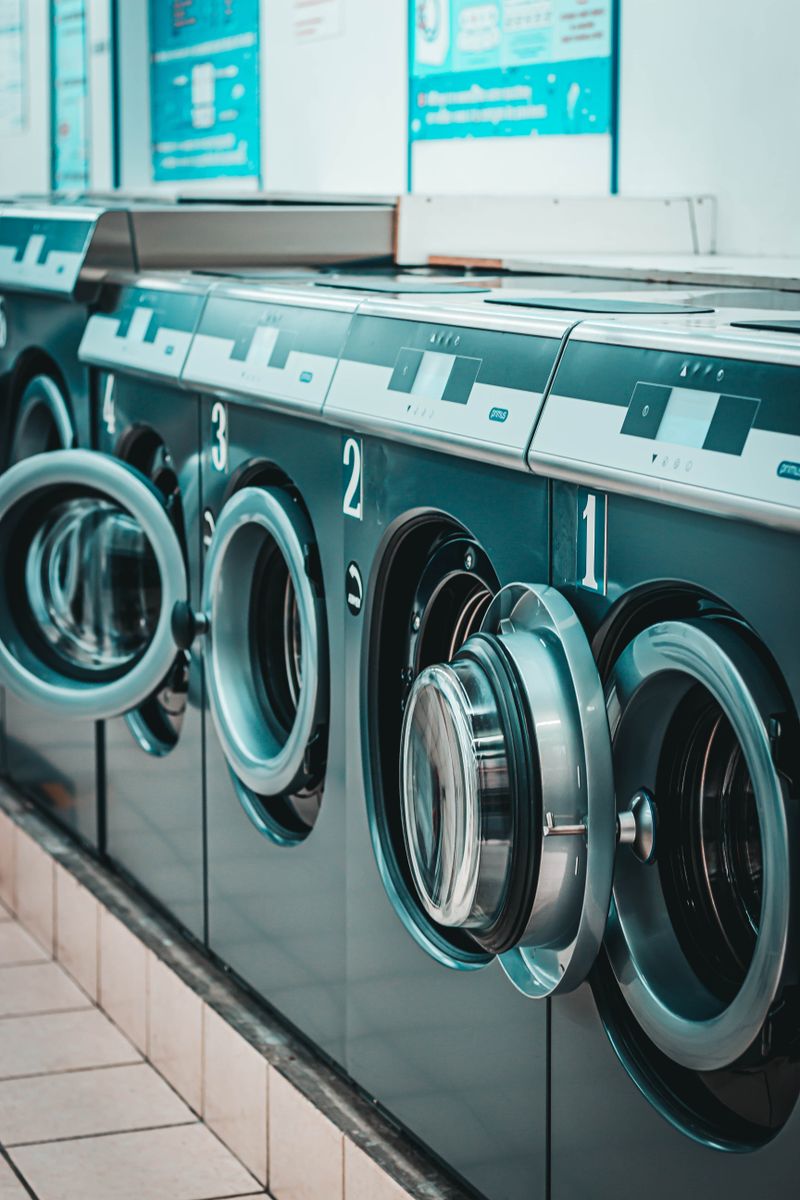
6. Slide a slim cart into the washer-dryer gap
That canyon between or beside your machines — usually five to ten inches — is a supply cabinet waiting to happen. A slim four-tier rolling cart slides in loaded with detergent, stain spray, dryer balls, and cleaning supplies, then rolls out with one finger when you need the bottom shelf. Measure the gap first; carts come in 5-, 7-, and 10-inch widths and the wrong one becomes a very thin shelf you can't reach into. See it on Amazon →
7. Hang a drying rack on the door you already have
The laundry room door is four square feet of storage on hinges, and an over-the-door drying rack borrows it without hardware. Fold it flat when it's empty; fold it out and it holds jeans, towels, or the line-dry-only pile directly over the machines that produced them. In a laundry closet with bifold doors, hang it on the nearest full-size door instead — bathroom doors work. See it on Amazon →
8. Put a magnetic lint bin on the machine itself
Lint is the tax every dryer load pays, and without a designated spot it ends up on top of the machine, in a pocket, or on the floor en route to a distant trash can. A magnetic lint bin snaps onto the side of the dryer at exactly the height your hand is when you clean the trap. Empty it once a week. This is the cheapest idea on this list per unit of daily annoyance removed. See it on Amazon →
9. A folding step stool that lives flat against the wall
Every idea above this line moved storage upward, which creates one new problem: reaching it. A folding step stool collapses to about two inches thick and hangs on a hook or slides beside the machine, so the top shelf stays usable instead of becoming the place things go to be forgotten. If you can't reach it barefoot with a laundry basket in one hand, you'll stop using it by August. See it on Amazon →
Sorting and supplies — the workflow fixes (10–14)
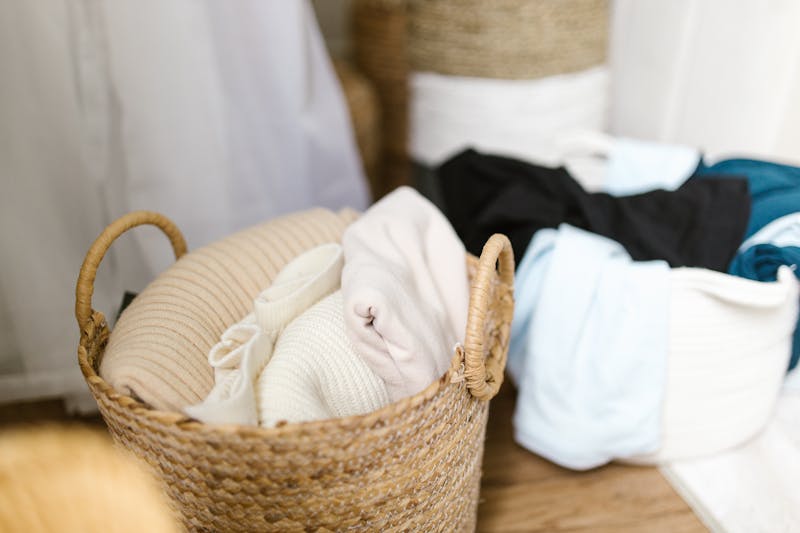
10. A three-bag sorter, so laundry arrives pre-sorted
The floor pile isn't a storage failure — it's a sorting failure. A rolling three-bag sorter gives lights, darks, and towels their own bag, which means wash day starts with grabbing a bag instead of excavating a mound. The bags lift off for carrying, the frame rolls, and the floor of your laundry space goes back to being a floor. This is the highest-impact idea in this post. See it on Amazon →
11. End the sticky shelf with a detergent drip stand
Every laundry shelf develops the same archaeology: a blue-ringed sticky patch under the detergent jug. A detergent stand elevates the jug so you can dispense from the spigot like a beverage cooler, and the built-in drip tray catches what the cap misses. It turns the messiest object in the room into a tidy little filling station. See it on Amazon →
12. Decant pods and sheets into airtight clear containers
The half-torn cardboard and zip bags detergent products ship in are why supply shelves look chaotic even when they're organized. Clear airtight containers make pods, dryer sheets, and scent boosters visible at a glance — you can see when you're low, they stay dry, and the shelf suddenly looks intentional. If small kids are in the house, this is also the cue to move pods up high; the container that keeps them fresh also keeps them out of reach. See it on Amazon →
13. Give lost socks and found objects an official home
Free idea: a small labeled bin on the shelf for the coins, hair ties, receipts, and single socks that every load produces. Without an official destination, pocket debris colonizes the top of the machine. With one, there's a place to check before you accuse the dryer of eating anything. Empty it monthly; match or retire the socks.
14. Keep exactly one backup, not a warehouse
Also free: small laundry spaces fail when they're asked to be a Costco annex. One open container of each product plus one backup is the ceiling — more than that and you're storing inventory in the most space-poor room of the house. Backstock beyond the one-backup rule lives elsewhere (garage, top of a closet), and the laundry space keeps only what the next four weeks of laundry needs.
The system that keeps it working (15–18)
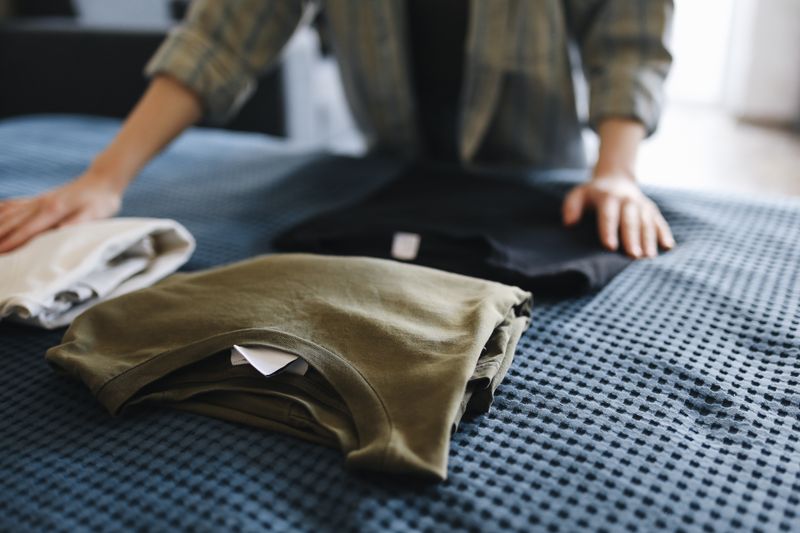
15. Build one folding surface, even a fake one
Clothes that leave the dryer unfolded travel the house as a wrinkled basket for days. If your machines are front-loaders, a smooth board or butcher-block offcut across the top makes a folding counter. Laundry closet with no machine-top? A wall shelf at counter height (idea #2's shelf works) or even the nearest bed with a designated fold-now rule does the job. The point is that folding happens in the laundry zone, immediately, not in the living room, eventually.
16. Run the machine-maintenance loop monthly
An organized laundry room that smells like mildew is still a failed laundry room. Once a month: run the washer's clean cycle (or hot wash with washing-machine cleaner), wipe the door gasket dry, leave front-loader doors cracked between loads, and vacuum the lint trap slot. Ten minutes, and it protects the appliances the whole room is organized around.
17. Label by task, not by product
Bins labeled "detergent" state the obvious. Bins labeled by task — Stains, Delicates, Repairs, Rags — tell anyone in the household where to look when something happens, which is the actual test of an organized space. A stain kit (spray, brush, instructions) grouped in one grab-and-go bin gets used in the two-minute window when stain treatment still works.
18. Do the 10-minute measure before you buy anything
Four numbers unlock every purchase above: the gap beside or between your machines (idea #6), the wall height from machine top to ceiling (ideas #1–2), the clearance behind the door when it's fully open (idea #7), and the stud positions if you're mounting the fold-down rack (idea #3). Small-space storage fails by half an inch. Measure, write the numbers in your phone, and buy to them.
Steal our pantry starter sheets (free)
An aisle-by-aisle grocery list + a ten-minute pantry inventory — the two pages that make a reset actually stick. They're part of our new Small-Space Pantry Bundle (310+ labels + 7 planner pages, $12).
Get the free sheetsThe one-load test
Here's how you'll know the room works: run one load start to finish. The hamper arrives pre-sorted, supplies are at arm's reach without moving anything, wet delicates go up instead of out, and the clean load gets folded where it landed. If any step still requires a trip to another room or a shuffle of three objects to reach a fourth, that's the next idea to implement. Small laundry rooms don't need more space — they need fewer moves per load.
Save this for later
Pin this guide to your laundry room board so it's there when wash day gets chaotic.
Save to PinterestPin these ideas
Tall, save-ready images for your organization boards.


One small-space idea, every Sunday
Join and we’ll send the free pantry starter sheets right away, then one organization idea worth your time each week. No clutter — obviously.
FAQ
- How do I organize a very small laundry room?
- Work the three zones every laundry space has: above the machines (a shelf or shelf-with-rod), beside them (a slim rolling cart in the gap), and the door (an over-the-door drying rack). Then fix the workflow with a three-bag sorter so laundry arrives pre-sorted instead of piling on the floor.
- What can I put in the gap between the washer and dryer?
- A slim rolling cart. Most gaps run 5 to 10 inches, and a 5-inch four-tier cart slides in loaded with detergent, stain spray, and dryer sheets, then rolls out with one finger. Measure the gap first — carts commonly come in 5-, 7-, and 10-inch widths.
- How do I air-dry clothes with no floor space?
- Go vertical and foldable: a wall-mounted fold-down rack projects only a few inches when closed, a retractable clothesline spans the room only on laundry day, and an over-the-door rack borrows space the door already sweeps. Between the three you can dry a full load in zero floor space.
- Where should detergent go in a small laundry room?
- Off the machine lid and into a station: a drip-tray stand for the jug, an airtight clear container for pods (up high if children are around), and one — only one — backup of each product on the shelf. Backstock beyond that lives outside the laundry space.
- What should I buy first?
- Do the 10-minute measure (gap width, wall height, door clearance), then buy in impact order: the three-bag sorter, the slim gap cart, and an over-machine shelf. Those three fix sorting, supplies, and storage for around $150 — add drying hardware once the basics hold.