
Small Home Office Organization: 18 Space-Saving Ideas for a Tiny Desk

A tiny desk fills up faster than any other surface in the home. It has to be a workstation, a filing cabinet, a charging station, and a catch-all for pens, notebooks, sticky notes, and yesterday's coffee cup — usually in a corner of a bedroom or living room with no room to spread out. Within a week the keyboard is hemmed in by clutter, the cables have knotted themselves under your feet, and there's nowhere left to actually set down a piece of paper. The desk is where you're supposed to focus, and instead it's the spot that makes you want to work somewhere else.
Organizing a small home office isn't about buying a bigger desk — there's no room for one. It's about treating flat surface as the scarcest resource you own and moving everything you can off of it: up onto the wall, under the desk, onto a riser, or onto a cart parked beside you. Do that and a compact desk holds a full workday's worth of tools while staying clear enough to think at. The eighteen ideas below are ordered the way you'd actually set a desk up — clear it and plan the zones first, then reclaim the desktop, tame the cables, build storage up and out, and finish with the drawers and small supplies. Fourteen are specific products with strong organic review histories on Amazon in 2026; the other four are free technique. Work through them in order and your desk goes back to being the place you get things done.
Organizing the whole room, not just the desk? See our small apartment organization guide →
Start here: clear it and plan the zones (1–2)

1. Clear the desk completely, then cap what earns a spot back
Before you buy a single organizer, take everything off the desk and set it on the floor. Then put back only what your hands actually touch during a working hour — the keyboard, mouse, one pen cup, a notebook, your drink. Everything else has to justify a place on the surface or it goes to a drawer, a shelf, or out of the office entirely. Most desks are cramped not because they're small but because they hold three days of accumulated stuff that never leaves. Capping the surface to the daily-use handful is free, takes ten minutes, and does more for a tiny desk than any product below.
2. Map your zones — reach, screen, and wall
A desk has three natural zones, and matching your storage to them is what keeps a small one from clogging. The reach zone is the arc your hands sweep without leaning — keep only live tools here. The screen zone is the space your monitor occupies, which you can double by lifting it. The wall above and the space under the desk are dead zones most people ignore entirely. Before you mount or buy anything, decide what belongs in each: daily tools in reach, storage on the wall and under the desk, overflow on a cart. Plan it once and every piece that follows lands where your habits already want it.
Reclaim the desktop (3–7)

3. A monitor riser with a built-in drawer
The single highest-leverage thing you can add to a small desk is a monitor stand with storage, because it turns wasted air into a drawer and lifts your screen to eye level at the same time. The monitor sits on top; the drawer and cubbies underneath swallow pens, sticky notes, a phone, and the small stuff that used to sprawl across the surface. A two-tier riser like this reclaims the entire footprint beneath the screen — space that was doing nothing but collecting clutter — and the ergonomic lift saves your neck as a bonus. On a compact desk it's the piece that pays for itself in surface area alone. See it on Amazon →
4. A desk pad to anchor the work zone
A large desk pad does something subtle but powerful on a small desk: it draws a clear boundary around the keyboard-and-mouse zone, and a defined zone stays tidier than an open one. Everything on the pad reads as "in use," everything off it as "put away," so clutter has an obvious line it isn't supposed to cross. The smooth surface also improves mouse tracking and protects the desk from scratches and coffee rings. Pick one sized to your keyboard and mouse together, in a color that reads calm, and the whole desk instantly looks more deliberate. See it on Amazon →
5. One good pen-and-tool cup
Loose pens are the fastest way a desk goes from clear to cluttered, and the fix is a single dedicated cup rather than pens scattered across every surface. A weighted metal desktop organizer holds pens, scissors, a highlighter, and a letter opener upright in one spot your hand returns to automatically. The rule that makes it work is one cup, not five little trays — everything that writes or cuts lives here and nowhere else. Keep it to the pens you actually use and toss the dead ones, and this one small container ends the pen sprawl for good. See it on Amazon →
6. A vertical desktop file organizer
Paper is what buries a small desk, because a flat stack has no bottom and no order — it just grows. A multi-tier desktop file organizer stands the paper up instead, giving current projects, bills, and reference sheets a labeled slot each so you can find a document without excavating a pile. A unit with tiered shelves plus a small drawer and pen holder does triple duty in a single narrow footprint against the wall side of the desk. Standing paper vertically instead of stacking it flat is the difference between a filing system and a mess. See it on Amazon →
7. A letter tray for the daily paper inbox
Even a paperless office still catches mail, receipts, and printouts, and without a single landing spot they cover the desk. A stackable letter tray gives incoming paper one inbox to sit in until you deal with it, which keeps it from spreading across the work surface. Use the top tier as "to do" and the lower ones as "to file" and "reference," and empty the top tier once a week. A four-tier tray with a drawer stacks that whole triage system into a small square, so the paper that used to migrate everywhere stays corralled in one corner. See it on Amazon →
Tame the cables (8–10)
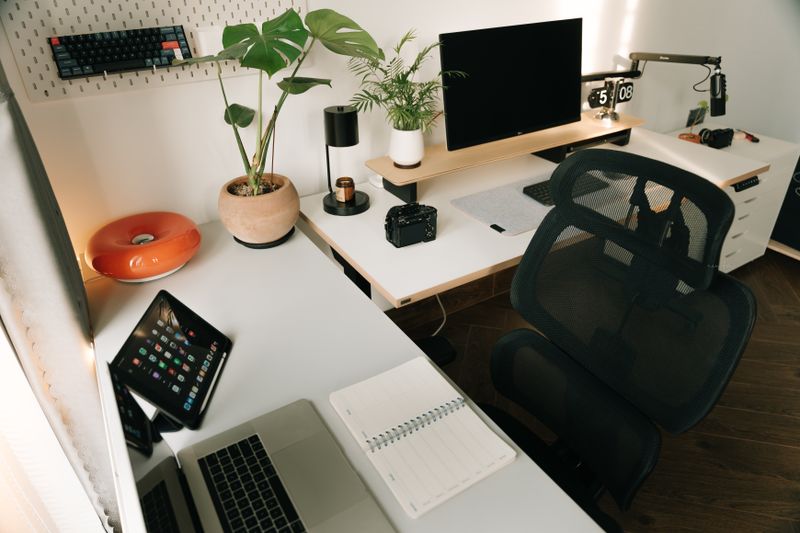
8. An under-desk cable management tray
Cables are the mess you don't see until you look under the desk — and then the tangle of power strip, charger bricks, and slack cord is dragging on the floor and catching your feet. A no-drill under-desk cable tray mounts beneath the surface and holds the power strip and all the excess length up and out of sight. The desktop reads as clean because the cords never climb onto it, and the floor stays clear because nothing pools down there. It's a ten-minute install that does more for how organized a desk looks than almost anything on top of it. See it on Amazon →
9. A cable box to hide the power strip
If mounting a tray isn't an option, a cable management box does the same job sitting on the floor or the desk: it hides the power strip and the knot of plugs inside a closed container, with the cords threading in and out through slots. The tangle that used to be the ugliest thing in the room disappears into a single tidy box, and it keeps dust and curious pets off the connections too. Set it where the cords naturally gather, feed the strip inside, and the visual noise of six plugs collapses into one clean shape. See it on Amazon →
10. Bundle and route the runs with what you already own
Between the tray and the box, the individual cable runs still need corralling, and you don't have to buy anything to do it. Twist ties, bread-bag clips, and the Velcro straps that came wrapped around your electronics are enough to bundle a monitor cable to a power cord and route the pair along a desk leg instead of across the floor. Leave a little slack so you can pull a laptop forward, group cords by where they go rather than by color, and label the plug ends with a strip of masking tape. It costs nothing and turns a spaghetti pile into a few tidy runs.
Build storage up and out (11–14)
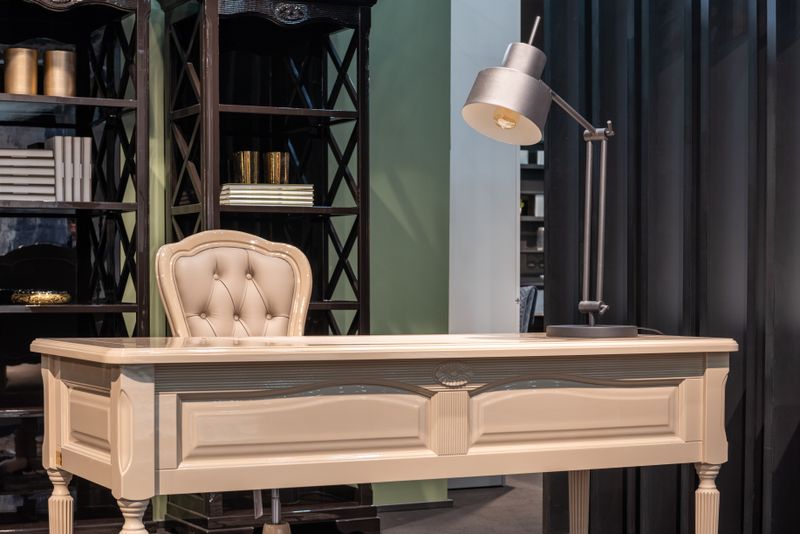
11. A pegboard on the wall above the desk
The wall directly above a desk is the biggest piece of unused storage in most small offices, and a pegboard turns it into a fully adjustable system. Hooks hold scissors, headphones, tape, and cables; small bins carry pens and paper clips; a shelf or two holds a plant or a notebook — all off the desk and up at eye level where you can grab them without looking. Because the hooks reposition in seconds, the layout grows with you instead of locking you in. Mounting the wall above the desk is what finally frees the surface below it. See it on Amazon →
12. Floating shelves overhead
Above the pegboard, or in place of it, a set of floating shelves lifts books, boxes, and reference binders off the desk and into the empty air over it. A stack of small shelves holds a surprising amount without a bulky bookcase footprint, and because they're bracket-free they read as clean lines rather than heavy furniture — which keeps a small room feeling open. Put the things you reach for weekly on the lowest shelf and the archive up top, keep the styling sparse, and the desk gains a whole storage wall while the floor stays completely clear. See it on Amazon →
13. A headphone stand that clears the desk
Headphones are bulky, and left on the desk they take up a surprising amount of the little surface you have. A dedicated headphone stand gives them a vertical home — either standing on the desk in a small footprint or, better on a tight desk, clamping under the edge so they hang out of the way entirely. Some double as a second hook for a bag or a cable. Getting the headset up off the surface and onto a hanger reclaims the exact patch of desk you keep shoving them across, and they're always right where your hand expects them. See it on Amazon →
14. A slim rolling cart for the overflow
Some things won't fit on the desk and don't belong on the wall — the printer paper, the notebooks, the chargers, the box of supplies you use weekly. A three-tier rolling cart parks under or beside the desk and holds all of it on wheels, so it rolls out when you need it and tucks away when you don't. It's the single most flexible piece of small-office storage because it needs no mounting, moves with you, and adds three shelves of space in a footprint the size of a stool. On a desk with no drawers, this cart is the drawers. See it on Amazon →
Drawers, supplies, and finishing touches (15–18)
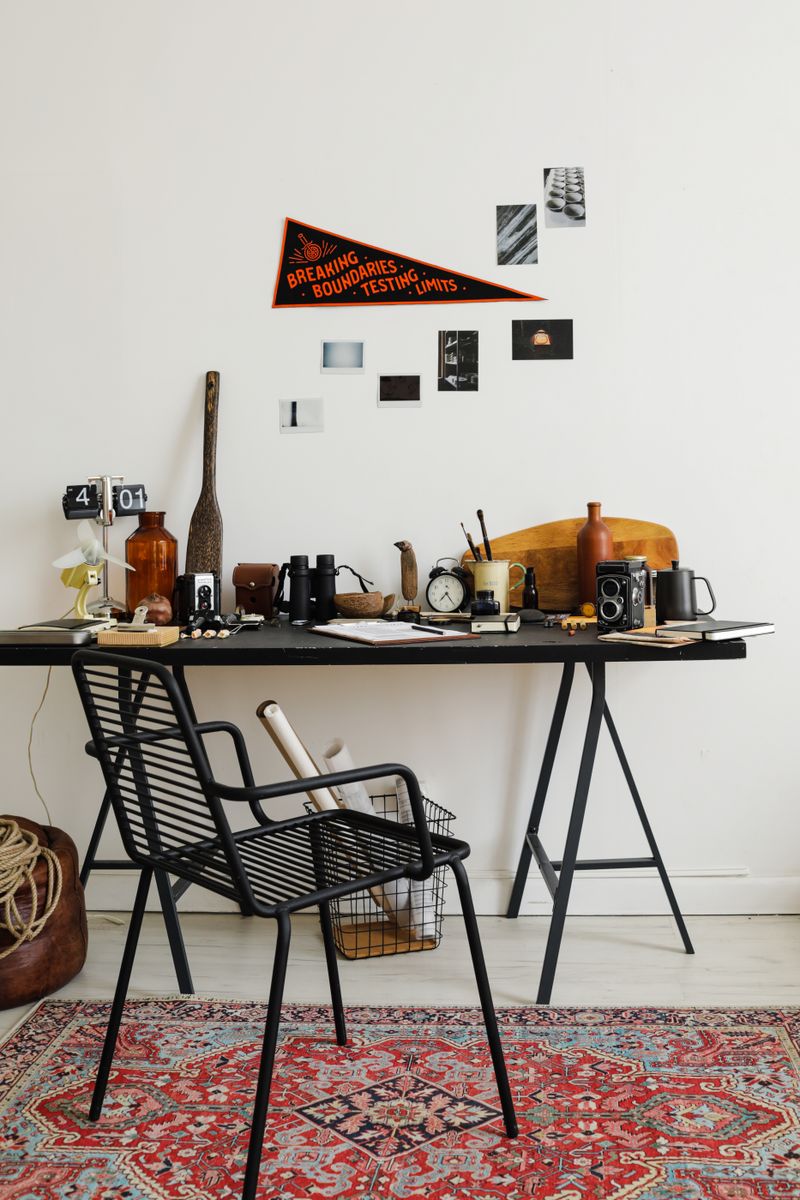
15. A drawer organizer tray
Whether it's the desk drawer, the riser drawer, or a cart shelf, a loose drawer becomes a junk drawer within a week. An adjustable drawer organizer with movable dividers splits the space into compartments so pens, clips, charging cables, sticky notes, and flash drives each get a lane instead of sliding into one heap. The adjustable walls let you size the sections to what you actually keep, and once everything has a slot you can find a paperclip without pawing through the whole drawer. It's a couple of dollars that turns your hidden storage from a dumping ground into real organization. See it on Amazon →
16. A mesh cup for chargers and loose cords
The short cables you use daily — the phone charger, the earbud cord, a spare USB — have nowhere to live and end up snaking across the desk. A simple wire-mesh cup gives them a second home separate from the pens, so you coil each cord loosely and drop it in point-up where you can grab the right one at a glance. Stand it beside the monitor riser or on the cart, and the charging clutter that used to tangle with everything else collapses into one small container. It's the cheapest fix on this list and it kills a daily annoyance. See it on Amazon →
17. A label maker to make it all stick
The difference between an organized office and one that slides back into chaos is whether things get returned to the right home — and labels are what make that automatic. A small label maker lets you tag drawer sections, shelf edges, cable ends, and storage bins so there's no guessing where anything goes, which matters most in a shared or busy space. Labeled cords save you unplugging the wrong thing; labeled bins mean supplies land back where they belong instead of anywhere. It's the finishing tool that turns a one-time cleanup into a system that survives a busy week. See it on Amazon →
18. The 30-second end-of-day reset
No desk system survives without one small habit: clear it before you log off. Take thirty seconds at the end of each work session to cap the pens, drop the day's paper into its tray, coil the stray charger back into its cup, and carry the coffee mug to the kitchen. Because everything already has a home, the reset is genuinely half a minute, not a chore — you're just returning the handful of things that drifted. Walking up to a clear desk the next morning is what makes the whole setup feel worth it, and it's the one step that keeps a tidy office tidy.
Save this for later
Pin this guide to your small-space and home-office board so it's there on your next desk reset.
Save to PinterestPin these ideas
Tall, save-ready images for your organization boards.


One small-space idea, every Sunday
Join and we’ll send the free small-space starter sheets right away, then one organization idea worth your time each week. No clutter — obviously.
FAQ
- How do I organize a small desk with limited space?
- Work in three moves: clear the desk completely, cap what earns a spot back on it, then send everything else up or under. Lift the monitor onto a riser so the space beneath it becomes storage, hang tools on the wall with a pegboard or floating shelves, and route cables into an under-desk tray. A small desk feels cramped because flat surface is the scarcest thing you own, so the whole game is moving what you can off the top and onto the wall, the riser, or a rolling cart parked nearby.
- What should I keep on my desk versus put away?
- Keep only what your hands touch every working hour: the keyboard and mouse, one pen cup, a notebook, and your current drink. Everything used a few times a day — chargers, letter trays, spare supplies — goes to a drawer organizer, a rolling cart, or a wall shelf within arm's reach but off the surface. Everything used weekly or less leaves the desk entirely. The test is frequency of touch, not importance, because a clear surface is what makes a tiny desk feel like enough room to think.
- How do I hide cables on a small desk?
- Get the cords off the floor and off the desktop with two cheap parts: an under-desk cable tray that mounts beneath the surface to hold the power strip and slack, and a cable management box that hides the strip and the plug tangle inside a single container. Bundle the runs between them with reusable ties or sleeves, and leave enough slack to pull a laptop forward. Once the cables live under the desk instead of across it, the surface reads as clean and nothing snags when you move.
- How can I add storage to a home office without a desk that has drawers?
- Build the storage on the wall and under the desk instead of inside it. A pegboard turns the wall above the desk into hooks and bins for tools and supplies, floating shelves hold books and boxes overhead, and a slim rolling cart parks beneath or beside the desk for the overflow that used to sprawl across the top. A monitor riser with a drawer adds hidden storage on the surface itself. Between the wall, the riser, and a cart, a drawerless desk gets more usable storage than most desks with drawers.
- How do I organize a home office if I rent and can't drill?
- Lean on the pieces that need no wall: a freestanding rolling cart, a no-drill under-desk cable tray that clamps or sticks on, a monitor riser and desktop organizers that just sit on the surface, and adhesive-backed cord clips. A pegboard or floating shelves can wait until you own the wall, and everything else in a small office setup can be freestanding. You get a fully organized desk that leaves the walls untouched and packs up cleanly the day you move.