
23 Bathroom Organization Ideas for Tiny Bathrooms
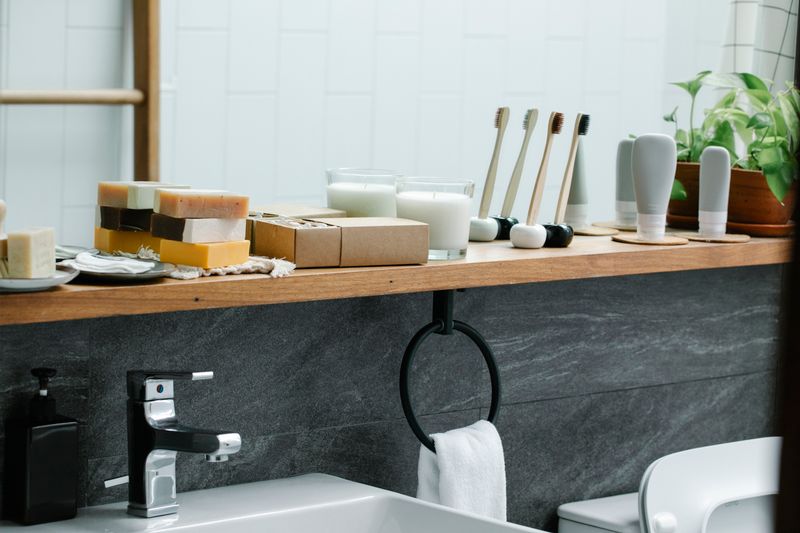
A tiny bathroom is the only room in the house where the storage problem and the traffic problem are the same problem. Everything you own in there is wet, daily, and shared — and the room gives you one counter the size of a placemat, a cabinet full of plumbing, and, if you are lucky, a drawer. So the toothpaste lives on the sink, the shampoo army lives on the tub ledge, and the hair dryer lives wherever it was dropped.
Square footage is not the constraint people think it is. A tiny bathroom has four surfaces that are almost always empty: the wall above the toilet, the back of the door, the vertical planes inside the shower, and the awkward volume under the sink that the P-trap ruins. The 23 ideas below work those four zones in order, then finish with the habits that keep the counter clear once the hardware is up. Most install in under ten minutes, and about half require no tools at all.
Can't drill a single hole? Pair this with 19 renter-friendly storage ideas →
Walls, doors, and the space above the toilet (1–6)
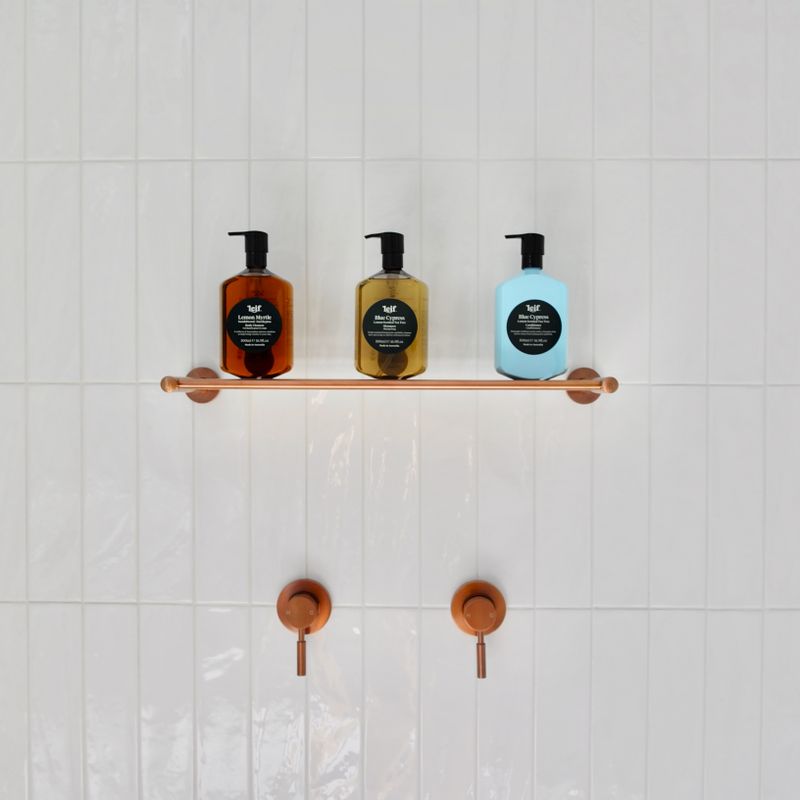
1. Build up over the toilet — the single biggest win
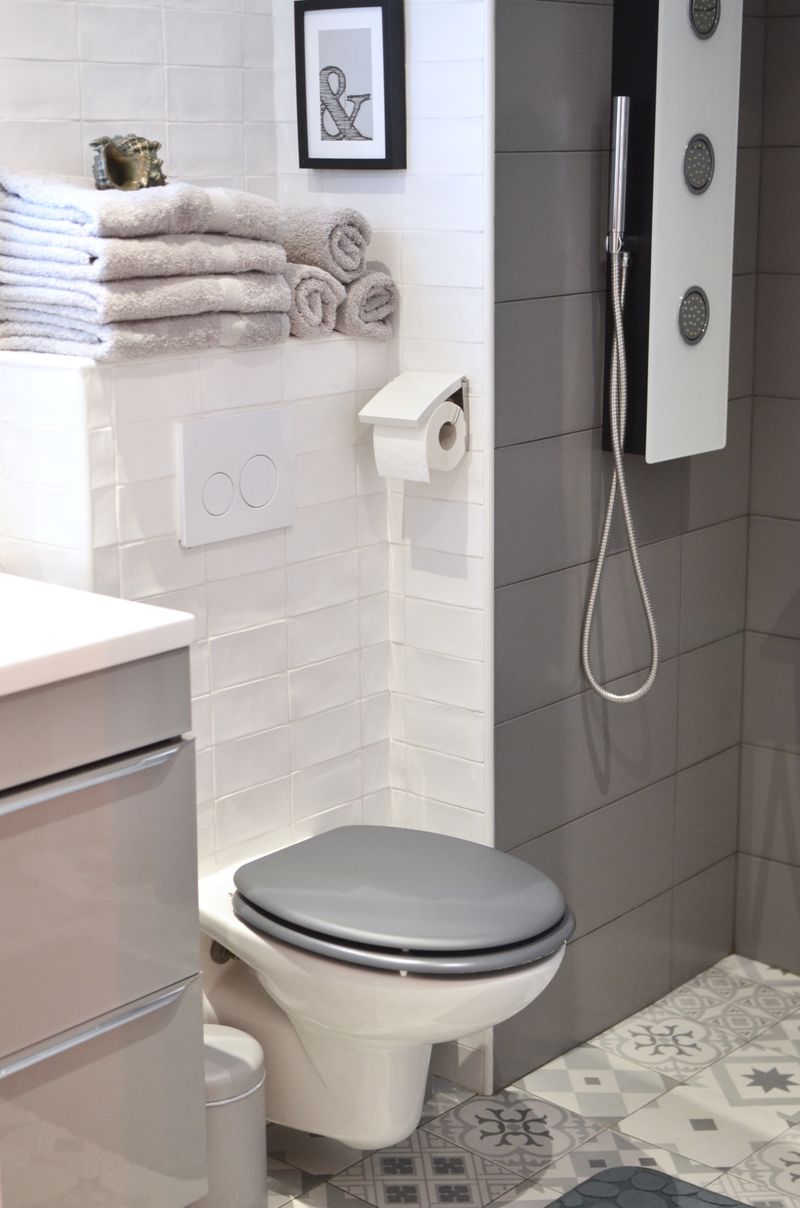
There are two to three feet of blank wall above every toilet in America, and it is the most valuable unused real estate in a small bathroom. A freestanding three-tier over-toilet unit straddles the tank and gives you shelf space for towels, backstock, and baskets without a stud finder or a landlord conversation. Measure your tank height and the distance to any window or vent before ordering — the legs need clearance on both sides of the bowl. See it on Amazon →
2. Stack your towels vertically instead of stacking them flat
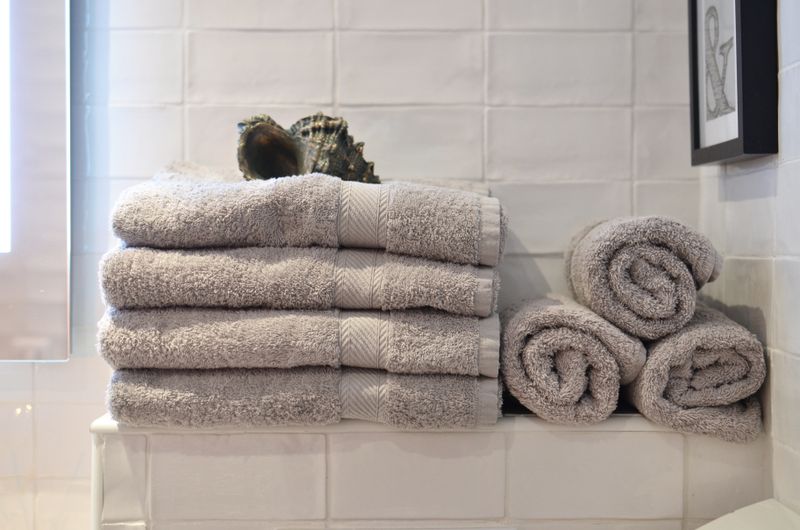
A single towel bar holds one towel. A wall-mounted towel rack with multiple arms or rails holds four in the same footprint, and because each hangs separately, they actually dry between uses instead of souring in a folded pile. In a bathroom with no linen closet, this is where your entire towel inventory lives — so buy for the number of people using the room, not the number of bars that came with the house. See it on Amazon →
3. Hang the door — four square feet you already own
The back of the bathroom door is a wall that nobody uses. An over-the-door rack with multiple hooks takes robes, towels, tomorrow's clothes, and the wet swimsuit off every horizontal surface in the room, and it installs in about eight seconds with no hardware. Check your door thickness first; most over-door brackets fit standard 1⅜-inch interior doors but not thicker solid-core ones. See it on Amazon →
4. Get the toothbrushes off the counter and onto the wall
Toothbrush cups are a small object with an outsized footprint: they take counter space, they pool water underneath, and they get knocked into the sink. A wall-mounted holder with a couple of cups moves the whole operation up to eye level, drains properly, and clears the exact patch of counter people reach for most. It is a ten-dollar-class fix for a daily irritation. See it on Amazon →
5. Mount hooks at the height people actually reach
Free idea, and the one most people get wrong. Towel hooks installed at 70 inches look tidy in a photo and get ignored by anyone under 5'6" — including, especially, children. Hang the primary hooks at roughly shoulder height for the shortest regular user, and add a second row low if kids share the room. A hook that requires a stretch loses every single time to the nearest doorknob.
6. Use the wall beside the mirror, not just above the sink
Also free: the vertical strip of wall flanking the mirror is usually blank because nobody thinks of it as storage. A narrow shelf, a magnetic strip for tweezers and clippers, or a single small basket there puts daily items within arm's reach of where you stand — which is the entire point. Storage that is one step away from the point of use gets used; storage in the hall closet does not.
Inside the shower (7–11)
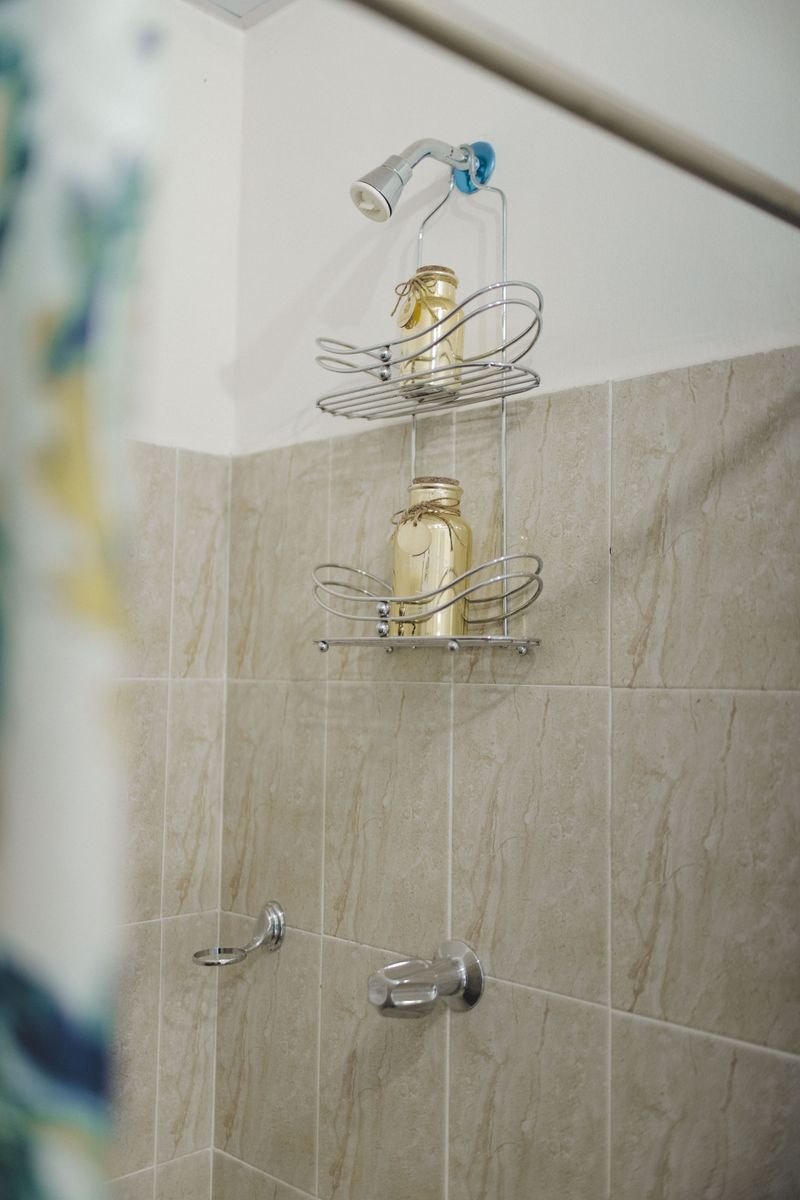
7. Claim the shower corner with a tension pole caddy
The corner of a tub or shower is dead space that a floor-to-ceiling tension pole converts into four adjustable shelves — enough for two people's full lineup plus a razor and a loofah. It installs with pressure rather than screws, which makes it the standard answer for rentals, and it puts everything above the water line so bottles stop sitting in a puddle. Check your ceiling height against the pole's range before buying. See it on Amazon →
8. Add adhesive shelves exactly where you need them
If a full corner pole is overkill, adhesive no-drill shower shelves let you place storage at the precise height your hand goes — one at shoulder height for shampoo, one low for the razor and the kids' bottles. Surface prep is everything: clean the tile with rubbing alcohol, let it dry completely, then wait the full 24 hours before loading it. Shelves that fall off almost always fell off because someone skipped the cure time. See it on Amazon →
9. Swap the curtain rod for a tension rod you can reposition
A spring tension shower curtain rod does two jobs in a tiny bathroom. First, it replaces a mounted rod without leaving holes. Second — the trick nobody uses — a cheap second tension rod installed higher inside the shower, or across a corner, becomes a hanging bar for a mesh bag of bath toys, a drying rack for hand-washables, or a second row of clip-on storage. See it on Amazon →
10. Cut the bottle count before you buy any shower storage
Free, and it makes every idea above cheaper. Most showers hold three to six bottles nobody uses: the conditioner from a hotel, the body wash somebody hated, the shampoo with an inch left. Pull everything out, keep only what got used this month, and consolidate duplicates. Half the shower storage problem is a shower inventory problem, and no caddy fixes owning eleven bottles.
11. Store the razor and the loofah where they can dry
Another free one, and it is about hygiene as much as tidiness. Anything that stays wet in a warm bathroom grows things — loofahs and razor heads especially. Hang them on a hook or an open wire shelf with airflow rather than parking them on the tub ledge in standing water, and replace loofahs every three to four weeks. An organized shower that breeds bacteria is not organized.
The vanity, counter, and drawers (12–17)
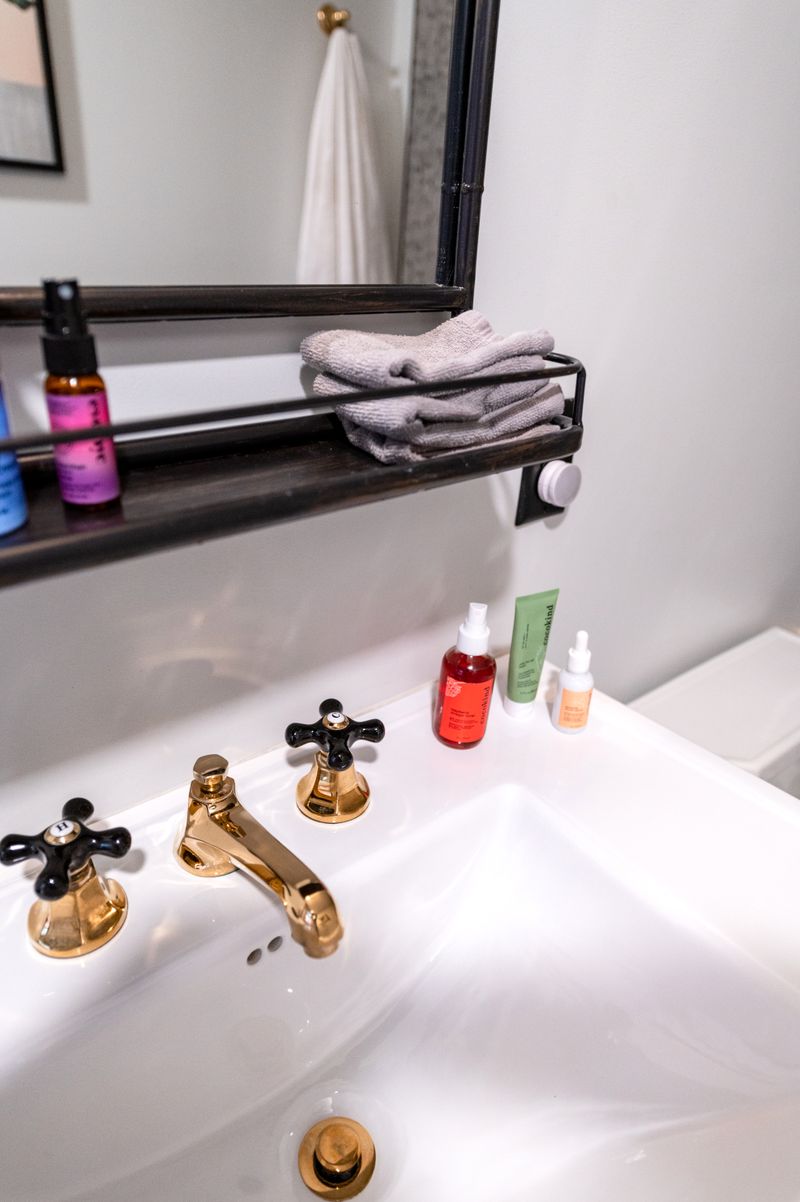
12. Give daily items one spinner instead of the whole counter
Loose items sprawl; contained items don't. A rotating multi-layer organizer holds the daily lineup — skincare, cotton rounds, hair ties, the things you touch every morning — in a footprint about the size of a dinner plate, and spins so the back row is reachable. The rule that makes it work: if it goes on the counter, it goes on the spinner. Nothing sits loose beside it. See it on Amazon →
13. Contain the makeup collection in one clear unit
Makeup is the category most likely to colonize a small bathroom, because it arrives in dozens of tiny irregular containers with no natural home. A tiered acrylic organizer with drawers gives brushes, palettes, and daily products defined slots, and the clear walls mean you can see what you own — which is the only reliable cure for buying a third of the same lipstick. Set it at the end of the counter, not the middle. See it on Amazon →
14. Hang the hair dryer instead of coiling it
A hair dryer and a straightener take up more drawer volume than everything else combined, and neither can go away hot. A wall-mounted hair tool holder mounts inside a cabinet door or on the wall beside the vanity, holds the dryer and the irons upright with the cords out of the way, and gives hot tools a safe place to cool. This is the single biggest volume win available inside a small vanity. See it on Amazon →
15. Divide the drawers, or the drawers divide themselves
An undivided bathroom drawer becomes a single mixed layer of nail clippers, hair ties, sample sachets, and one mysterious key within about three weeks. A set of clear plastic drawer organizers in mixed sizes gives every category a walled compartment so items stay where you put them when the drawer slams. Measure the drawer's interior depth as well as its length — deep drawers waste half their volume without a second tier. See it on Amazon →
16. Add drawers where the bathroom didn't give you any
Plenty of small bathrooms have exactly zero drawers. A set of stackable clear storage drawers sits on a shelf, in a cabinet, or in the over-toilet unit from idea #1 and manufactures the drawer storage the room never had — one for first aid, one for dental, one for hair. Because they stack, you can also build the exact height that fits your shelf gap. See it on Amazon →
17. Enforce the five-item counter rule
Free, and it is what keeps the previous five ideas from unravelling. Pick the five things that genuinely get touched every single day — soap, the spinner, the toothbrush holder, a hand towel, one plant if you like — and make everything else live behind a door. The rule is not about minimalism. It is that a counter with a defined cap has a resting state to return to, and a counter without one only accumulates.
Under the sink and the leftover gaps (18–20)
18. Buy under-sink storage that expects the plumbing
The cabinet under a bathroom sink is mostly air, and the P-trap is why it stays that way — a rectangular bin can't use the space around it, so everything ends up in one reachable front row with a wasteland behind. A pull-out organizer designed to straddle the pipe turns that cave into two accessible tiers that slide out. Measure the pipe's height and horizontal position first; this is the one purchase where an inch of error makes the product unusable. See it on Amazon →
19. Slide a slim cart into the gap beside the vanity or toilet
Almost every small bathroom has a narrow orphan gap — beside the vanity, between the toilet and the wall, next to the tub. A slim three-tier rolling cart fits gaps in the 5-to-10-inch range and holds spare toilet paper, cleaning supplies, or a full extra person's products, then rolls out to be reached and rolls back. Measure the gap at its narrowest point, including baseboards and trim. See it on Amazon →
20. Group by task, not by product type
Free. Under-sink chaos is usually a labeling problem disguised as a space problem. Sort into bins named for what someone will be looking for — First Aid, Dental, Hair, Cleaning, Backstock — instead of by brand or bottle size. Anyone in the household can then find the bandages during the two minutes when finding them matters, and things get put back because the destination is obvious.
Steal our pantry starter sheets (free)
An aisle-by-aisle grocery list + a ten-minute pantry inventory — the two pages that make a reset actually stick. They're part of our new Small-Space Pantry Bundle (310+ labels + 7 planner pages, $12).
Get the free sheetsThe habits that keep it that way (21–23)
21. Run an expiry sweep twice a year
Bathrooms hoard chemistry. Sunscreen, medication, mascara, and most skincare have real expiry dates, and a tiny bathroom cannot afford to store dead product. Twice a year, pull everything out and check dates — mascara at roughly three months, sunscreen and medications by their printed date. Most people recover an entire shelf on the first pass. Take expired medication to a pharmacy take-back rather than the bin or the toilet.
22. Keep one backup, not a stockpile
A tiny bathroom is the worst place in the house to store inventory, because every cubic inch there is prime real estate and every cubic inch in a hall closet is not. One open container plus one backup of each product is the ceiling. The eight-pack of toilet paper and the warehouse shampoo live somewhere else, and the bathroom keeps only what the next month needs.
23. Do the two-minute reset before bed
The final habit, and the cheapest. Every item in this bathroom now has an assigned home, which means putting the room right is a two-minute job rather than a Saturday project: things on the counter go back to the spinner, wet things go to hooks, and the sink gets a wipe. Do it nightly and the room never gets far enough out of order to need organizing again.
The three purchases that matter most
If the list is long and the budget isn't, buy in this order. First the over-toilet unit — it adds the most storage per dollar and takes zero floor space you were using. Second the under-sink pull-out, because it converts a large volume you already own from unusable to usable. Third whichever shower solution matches your situation: the tension corner pole if you have two or more people's bottles, adhesive shelves if you have one.
Then stop and live with it for two weeks before buying anything else. The remaining problem after those three is almost never a missing product — it's the five-item counter rule, or the one-backup rule, or a hook mounted too high for the person who needs it. Small bathrooms don't need more storage so much as they need every object in them to have exactly one obvious place to go.
Save this for later
Pin this guide to your bathroom board so it's there on your next reset day.
Save to PinterestPin these ideas
Tall, save-ready images for your organization boards.


One small-space idea, every Sunday
Join and we’ll send the free pantry starter sheets right away, then one organization idea worth your time each week. No clutter — obviously.
FAQ
- How do I organize a tiny bathroom with no storage?
- Work the four surfaces every small bathroom has: the wall above the toilet, the back of the door, the shower walls, and the space under the sink around the P-trap. An over-toilet unit, an over-door hook rack, an adhesive or tension shower shelf, and a U-shaped under-sink organizer add roughly ten usable shelves without costing a square inch of floor.
- How do I keep my bathroom counter clear?
- Cap it at five items and contain them. Only what you touch daily stays out, on one spinner or tray rather than loose; everything else goes behind a door or into a divided drawer. Counters fail because items have no assigned home, not because they're small.
- What's the best bathroom storage for renters?
- No-drill only: adhesive shower shelves, tension-pole corner caddies, tension curtain rods, over-the-door hook racks, and freestanding over-toilet units. All of them come out clean at move-out and none require a landlord conversation.
- How do I organize under a bathroom sink?
- Buy for the plumbing rather than around it — a U-shaped or two-tier pull-out straddles the P-trap and makes the whole cabinet reachable. Add a slim rolling cart in any leftover gap, and group everything into bins labeled by task (First Aid, Dental, Hair, Cleaning) instead of by product type.
- What should I buy first?
- Measure, then buy in impact order: the over-toilet unit, the under-sink pull-out, and one shower solution — a tension corner pole for multiple people, adhesive shelves for one. That's roughly $100–$125 and it fixes the three biggest storage gaps. Live with it two weeks before adding anything else.