The 5-Zone Pantry Method, Explained
Most pantry organization fails for a reason nobody talks about: it organizes by category when it should organize by reach. Alphabetized spices look great on day one. But if the flour you use twice a week lives on a step-stool shelf and the party platters you use twice a year live at eye level, the system is fighting your arms — and your arms always win.
The 5-Zone Method fixes the layer underneath the bins: it assigns every shelf a job based on how often you reach for what lives there. It costs nothing to set up, works in any pantry from a walk-in to a single cabinet, and it's the system behind everything we publish about kitchens.
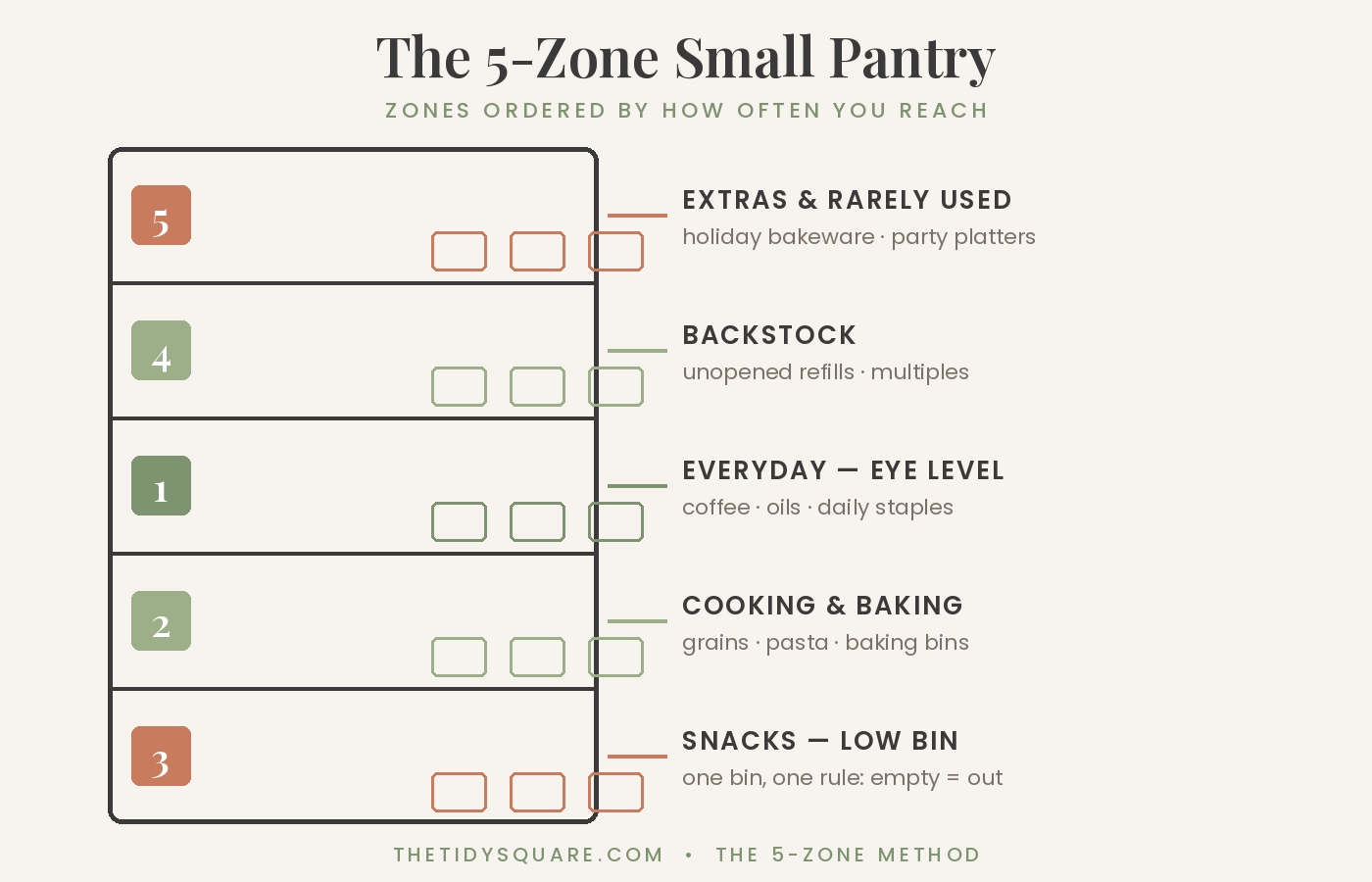
Zone 1 — Everyday (eye level, always)
Coffee, tea, oils, the salt you cook with, breakfast, the peanut butter. If you touch it most days, it lives between your shoulders and your eyes — prime real estate goes to daily-use items, no exceptions and no sentimentality. This is the zone where airtight canisters earn their keep: the five staples you open constantly stay fresh, visible, and pourable. The set we recommend →
Zone 2 — Cooking & Baking (one shelf, grouped in bins)
Grains, pasta, baking supplies, sauces — the ingredients that come out when you're actually cooking. The move here is grouping by job, not by item: one bin for baking, one for grains and pasta, one for sauces. When taco night starts, one bin lands on the counter instead of six trips. Clear bins with handles make high shelves usable. The 6-pack that fits most shelves →
Zone 3 — Snacks (one bin, one rule)
All snacks in one container, and one rule: when the bin is empty, snacks are out until the next shop. This single constraint ends both the scattered-snack problem and the mystery of where the grocery budget went. Height is a parenting decision: kid-reachable if you want self-service, top shelf if you don't.
Zone 4 — Backstock (up high or down low)
Unopened refills and multiples. The critical rule: nothing opened lives in backstock, and nothing in backstock gets opened until its Zone 1 or 2 counterpart runs out. Shop your own backstock before every grocery run — that's what the pantry inventory sheet is for, and it's where the double-buying stops.
Zone 5 — Extras & Rarely Used (the awkward spots)
Holiday bakeware, the punch bowl, appliance attachments. They get the awkward top corner — or better, they leave the kitchen entirely. A year untouched means it doesn't deserve pantry space at all. The corner that remains becomes reachable with a lazy susan. The 18″ standard →
Mapping your zones (10 minutes before you touch a shelf)
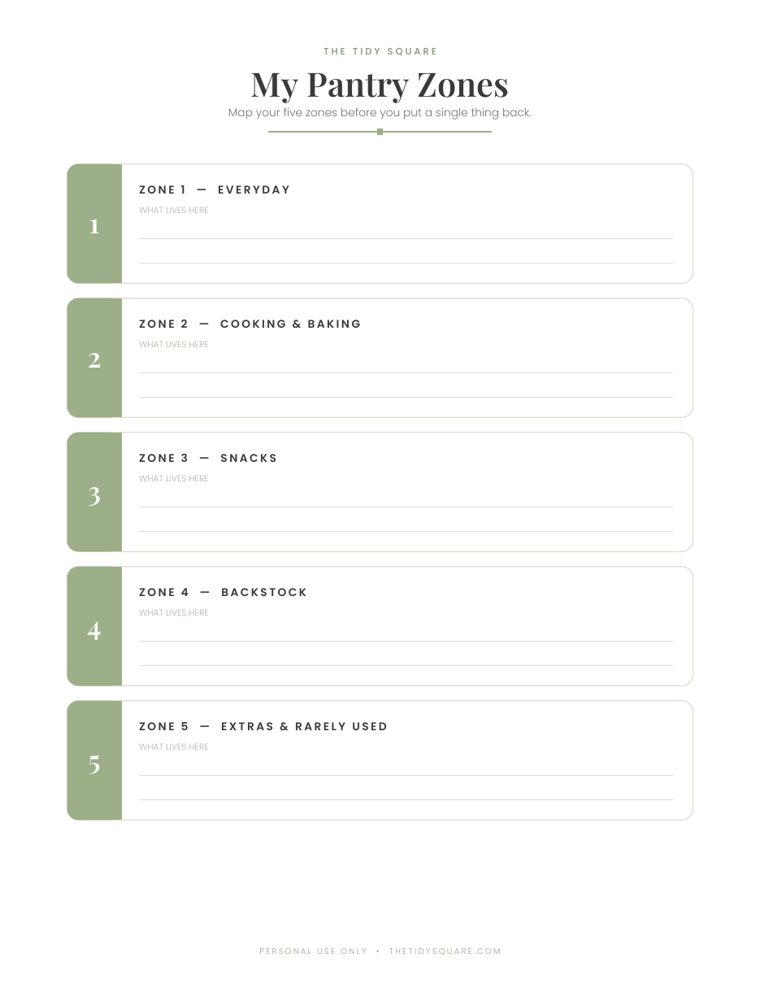
Don't organize by instinct — sketch it. Stand in front of your pantry and mark which shelves are eye level, which need a stretch, which need a crouch. Assign zones by reach, write what lives in each, and only then start moving food. The free starter sheets cover the inventory; the full bundle includes the dedicated zone-map planner page:
The two rules that keep zones alive
The 20% rule
Every shelf stays a fifth empty. A full shelf can't accept groceries, so new food colonizes the counter, and the counter becomes the system. Leaving space feels wasteful; it's the opposite — you're buying back your counter.
Labels are the contract
Zones survive only if everyone in the house silently agrees where things go — and that agreement is a label. Bins, canisters, shelf edges. Masking tape works on day one; our printable label system makes it permanent for $12.
Small-space adaptations
The single-cabinet pantry
Zones compress, not disappear: eye-level shelf = Zone 1, the shelf above splits into Zones 2 and 4 (left/right), a snack bin on the bottom, and Zone 5 leaves the kitchen — hall closet, under the bed, wherever. The method is about reach order, not shelf count.
The deep closet pantry
Depth is where food goes to expire. Fight it with rows: backstock behind everyday within the same shelf, and bins you can pull like drawers. First-in-first-out beats remembering.
The no-pantry kitchen
A rolling cart is a pantry that parks: Zone 1 on top, Zone 2 in the middle, snacks below. Roll it to the counter when you cook. Zones 4 and 5 go wherever the apartment allows.
Run the method with our printables
The free starter sheets get you the inventory and grocery list. The full Small-Space Pantry Bundle adds the zone map, 310+ labels, and the complete method guide — $12, print at home.
Start free
Save this for later
Pin the method to your organization board — it's the reference for reset day.
Save to PinterestOne small-space idea, every Sunday
Join and we’ll send the free pantry starter sheets right away, then one organization idea worth your time each week. No clutter — obviously.
FAQ
- What is the 5-Zone Pantry Method?
- A system that organizes your pantry by how often you reach for things, not by food category: everyday items at eye level (Zone 1), cooking & baking together (2), snacks in one bin (3), backstock separate (4), and rarely-used extras out of prime space (5).
- How long does it take?
- About an hour for a typical small pantry: empty, purge, group, place by reach, label. The mapping step takes ten minutes and saves you from doing it twice.
- Does it work in a single cabinet?
- Yes — zones compress. One shelf can hold two zones split left and right. The method is reach order, not shelf count.
- Why does my pantry get messy again after I organize it?
- Almost always one of two reasons: shelves were filled to 100% (so new groceries never had a home), or categories were never labeled (so things get put down instead of put back). The 20% rule and the label layer fix both.
Ready to build it? The exact shopping list: the complete budget pantry system under $100 →