How to Set Up a Coffee Bar in a Small Kitchen (15 Essentials)
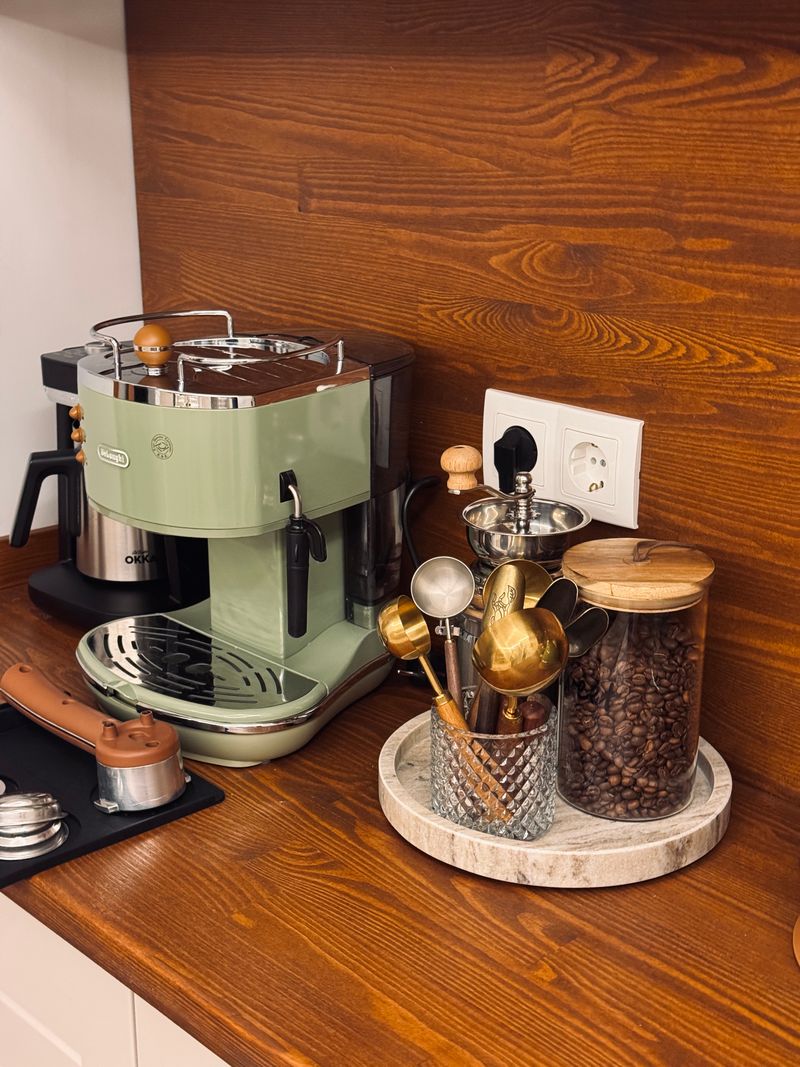
A coffee bar sounds like something that needs a dining-room console and a Pinterest-perfect wall. It doesn't. It needs eighteen inches of surface, one outlet, and a decision: everything coffee lives here, and nothing else does.
That decision is the whole trick. In most small kitchens, coffee is a scavenger hunt — beans above the fridge, mugs in two cabinets, sweetener in the pantry, spoons in the fourth drawer you check. Consolidating it into one station gives you back five foggy morning minutes and, more importantly for a small kitchen, it contains the sprawl. Coffee stuff is clutter with excellent PR; a station gives it a border.
Here are the 15 essentials, in the order I'd actually buy them — three are free habits, and none require a renovation.
Working on the whole room? Start here: 25 small kitchen organization ideas →
First, pick the spot (before you buy anything)
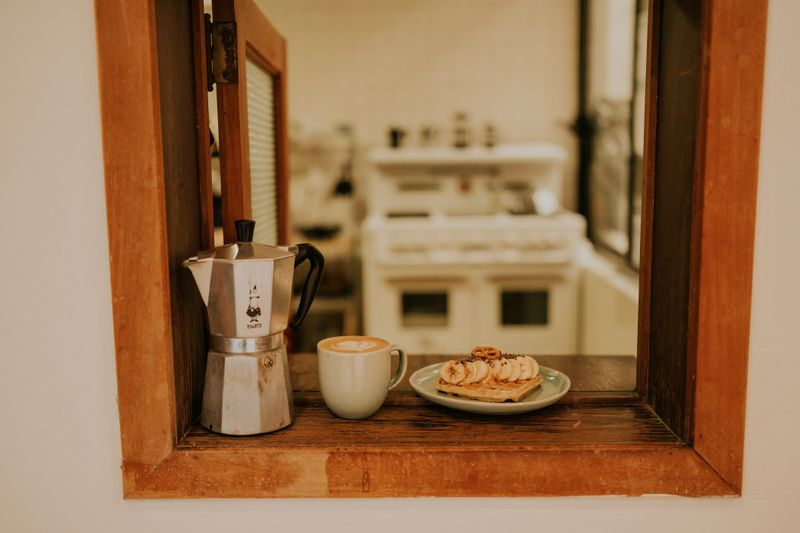
Three rules for the location. It must be near an outlet (extension cords across counters are how kettles die). It must be off your primary prep zone — the coffee bar that annexes your only cutting-board space will be dismantled within a month. And it should sit near, but not in, the sink zone: you'll be filling tanks and rinsing frothers daily.
In a small kitchen the real candidates are: the dead corner of an L-shaped counter, the top of a low cabinet or microwave cart, a rolling cart parked in a gap, or — the most underrated — a sliver of counter directly under an upper cabinet, which lets you steal storage from the cabinet above it.
The foundation: define the territory (1–3)
1. A tray that draws the property line
A wood tray with handles is the difference between "a coffee bar" and "appliances near each other." Everything on the tray belongs to coffee; anything else that lands there gets evicted at the nightly reset. It also protects the counter from drips and moves in one trip when you need the surface back. See it on Amazon →
2. A slim rolling cart, if the counter can't spare a foot
The 5-inch gap beside your fridge is a coffee bar waiting to happen. A three-tier slim cart holds pods, syrups, and backup beans on its shelves and rolls out for restocking. Keep the machine itself on a stable counter; let the cart be the pantry annex that serves it. See it on Amazon →
3. Two floating shelves overhead
The wall above your station is free real estate: mugs on the lower shelf, canisters and the pretty stuff on the upper. Two small anchors per shelf — a spackle-and-touch-up job at move-out, so renters aren't excluded. See it on Amazon →
The machine zone (4–6)
4. A pod drawer the machine sits on
If you're a pod household, this is the single best square-footage play in the entire post: a drawer that stores three dozen pods underneath the machine you already own. New storage, zero new footprint — the small-kitchen holy grail. See it on Amazon →
5. A gooseneck kettle (for the manual brewers)
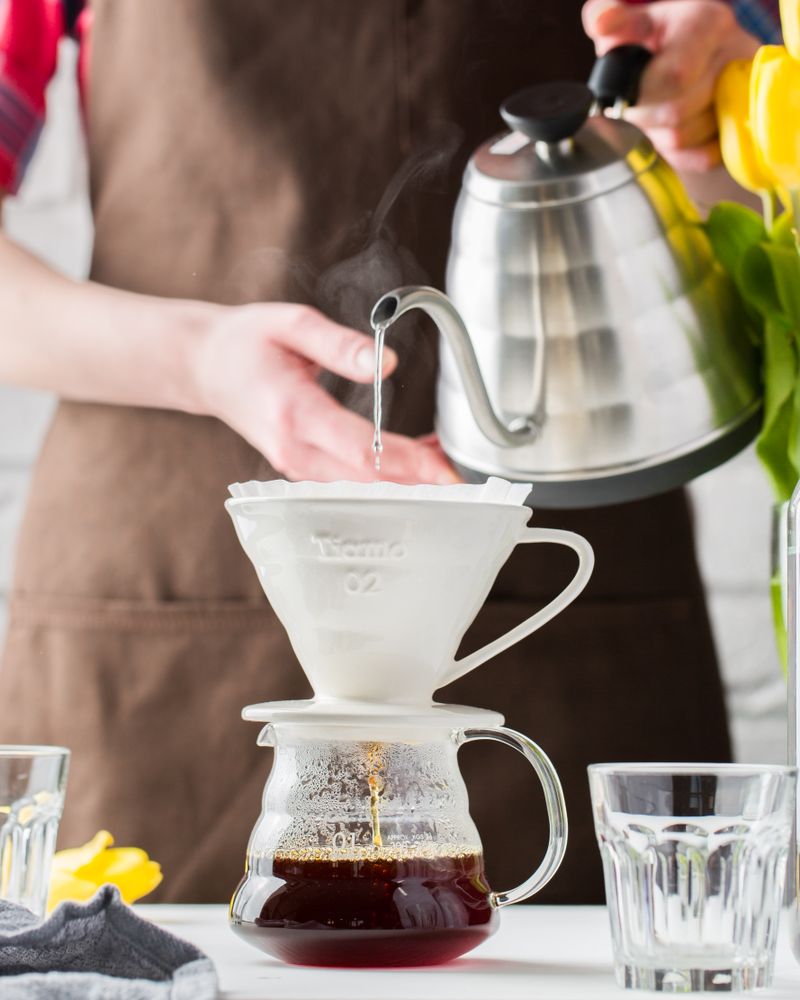
If pour-over or French press is your ritual, an electric gooseneck with temperature control replaces the stovetop kettle, frees a burner, and doubles as the tea station. Slim profile, small base — it earns its outlet. See it on Amazon →
6. A handheld milk frother
The entire latte experience, stored in a drawer. A wand frother turns any milk into café foam in twenty seconds and takes up less room than a wooden spoon — the highest joy-per-cubic-inch item here. See it on Amazon →
Supplies: store like a barista, not a shelf of bags (7–10)

7. An airtight canister for beans
The folded-over bag with a binder clip is costing you flavor — beans fade fast once air gets in. One stainless airtight canister with a view window keeps a week or two of beans fresh and looks intentional doing it. Decant, then store the backup bag elsewhere. See it on Amazon →
8. A tiered syrup rack
Syrup bottles are tall, tippy, and multiply every holiday season. A two-tier rack stands eight bottles in the footprint of three and puts the labels at eye level, stadium-style. If your station has a "sticky corner," this is the fix. See it on Amazon →
9. A lidded box for tea and sweeteners
Every coffee bar quietly becomes a beverage bar. A bamboo compartment box gives tea bags, sweetener packets, and cocoa sachets one lidded home instead of four torn boxes — and guests can serve themselves without opening your cabinets. See it on Amazon →
10. An expandable organizer for the overflow drawer
Filters, scoops, the spare frother head, the pour-over dripper: station-adjacent gear that shouldn't live on the station. One expandable bamboo organizer in the nearest drawer keeps the backstage as tidy as the stage. See it on Amazon →
Mugs: the coffee bar's biggest clutter risk (11–13)
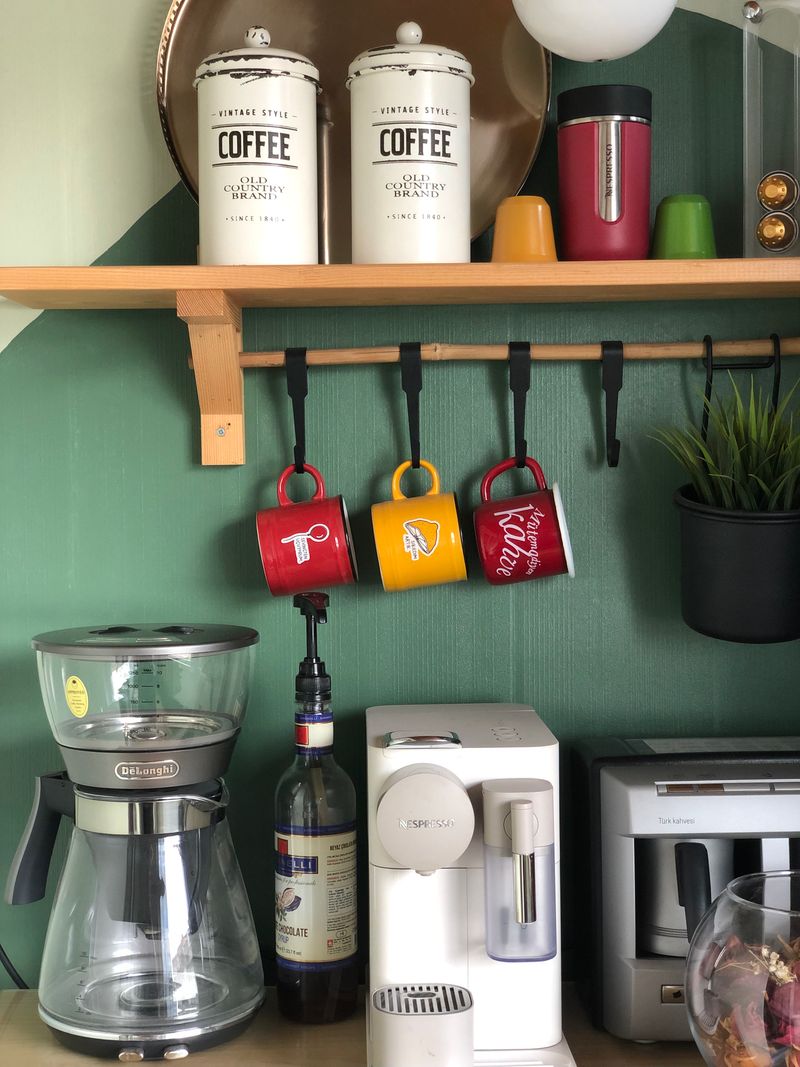
11. A mug tree for the daily rotation
Six hooks, six mugs, zero cabinet doors between you and caffeine. A mug tree also sets a hard cap — when the hooks are full, the collection is full. See it on Amazon →
12. Under-cabinet hooks for the second string
Screw-in hooks under the upper cabinet float another row of mugs in air that was doing nothing. They free a full cabinet shelf and make the station look like a café did it on purpose. See it on Amazon →
13. The six-mug rule (free)
Mugs breed. Conference mugs, gift mugs, the novelty one that seemed funny once. Keep six in rotation, box the sentimental ones, donate the rest. No purchase fixes a mug population problem; a rule does.
The two habits that keep it working (14–15)
14. The one-open-bag rule (free)
Only one open bag or box of anything lives at the station: one coffee, one tea variety box, one sweetener. Backups live in the pantry. The moment duplicates move in, the station stops being a bar and becomes a shelf again.
15. The 90-second nightly reset (free)
Wipe the tray, rinse the frother, restock tomorrow's pods, evict anything that isn't coffee. Ninety seconds at night is the entire maintenance plan — and the difference between a station that lasts years and one that dissolves by August.
Steal our pantry starter sheets (free)
An aisle-by-aisle grocery list + a ten-minute pantry inventory — the two pages that make a reset actually stick. They're part of our new Small-Space Pantry Bundle (310+ labels + 7 planner pages, $12).
Get the free sheetsStart with these three
The tray (#1), the pod drawer or canister (#4 or #7, depending on how you brew), and the six-mug rule (#13). That's the definition, the storage, and the discipline — the actual coffee bar. Everything else is a delightful upgrade you can add one payday at a time.
Save this for later
Pin this guide to your coffee bar board so it's there when you need it.
Save to PinterestPin these ideas
Tall, save-ready images for your organization boards.


One small-space idea, every Sunday
Join and we’ll send the free pantry starter sheets right away, then one organization idea worth your time each week. No clutter — obviously.
FAQ
- Where should I put a coffee bar in a small kitchen?
- Near an outlet, off your main prep counter, and close to (not in) the sink zone. The dead corner of an L-shaped counter, a slim cart in a gap, or the top of a low cabinet all work. The prep-counter rule is the one people break — and the reason most small-kitchen coffee bars get dismantled.
- What do you actually need for a home coffee bar?
- Less than the inspiration photos suggest: the machine you already own, a tray to define the station, airtight storage for beans or a drawer for pods, and mugs within arm's reach. Frothers, syrup racks, and kettles are upgrades, not requirements.
- How do I make a coffee bar with no counter space at all?
- Go rolling or go vertical. A slim 5-inch cart fits beside almost any fridge; two floating shelves above an outlet can hold a full station; the top of a bookcase or microwave cart works if it's stable and near power.
- How do I keep a coffee station from getting cluttered?
- Three rules: one open bag of anything at a time, six mugs in rotation, and a 90-second nightly reset — wipe the tray, rinse the frother, restock pods. Clutter is input outpacing output; the rules cap the input.